Pomegra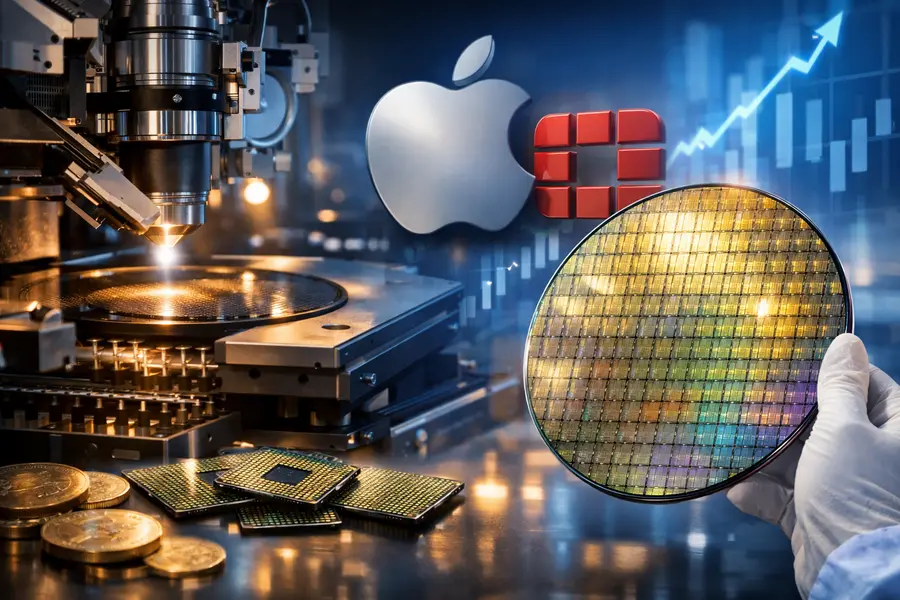
Intel's 18A chip node reaches 85% yield and 30,000 wafers per month, drawing Apple and Fortinet as customers as INTC surges 160% year-to-date in 2026.
- Intel's 18A process node achieves 85% yield and 30,000 wafers/month across Arizona and Oregon fabs, resolving earlier manufacturing setbacks.
- Fortinet signs as Intel's first named cybersecurity foundry customer; Apple reaches a preliminary deal for 18A-P production of M-series chips.
- INTC gained 8.64% on July 21 to reclaim $100; Q2 2026 earnings are due after market close on July 23, with consensus at $14.42B revenue.
Lead
Intel Corporation (INTC) closed above $100 for the first time since its manufacturing recovery began, rising 8.64% on July 21, 2026, after the company confirmed Fortinet as the first named cybersecurity customer for its Intel Foundry services. The announcement, paired with a preliminary supply agreement with Apple and a broadened artificial-intelligence partnership with Google Cloud, extended INTC's 2026 advance to approximately 160%. With second-quarter results due July 23, the session underlined how thoroughly investor sentiment has pivoted toward Intel's semiconductor technology gamble — even as the foundry business continues to run a $2.4 billion quarterly operating deficit.What Happened
The Fortinet agreement covers Fortinet's Security Processor 6 (SP6), a custom network-security chip to be manufactured on Intel's Intel 4 process — a production-proven node that preceded 18A. The deal is the most concrete external customer disclosure under Chief Executive Lip-Bu Tan, who assumed leadership in March 2025 and restructured the foundry business around attracting third-party design wins.
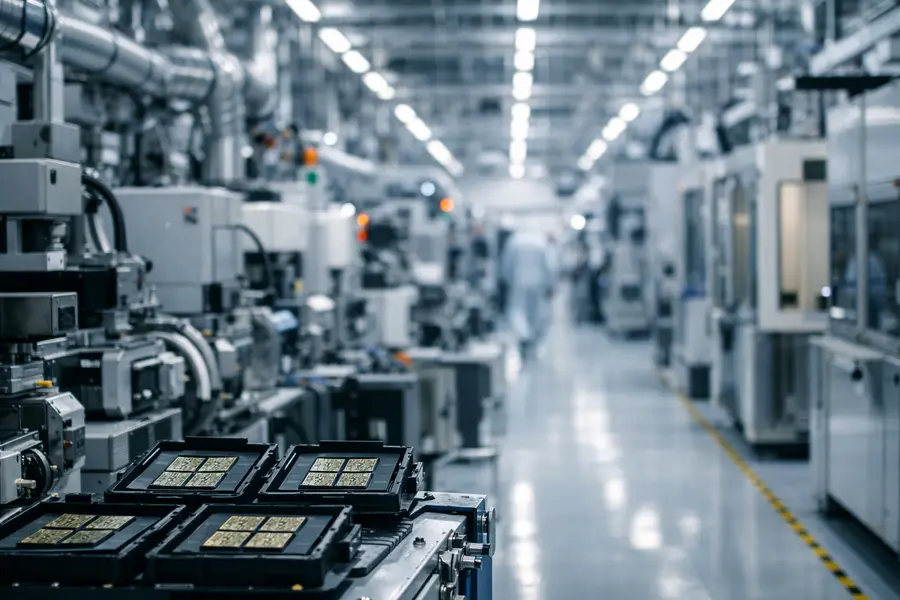
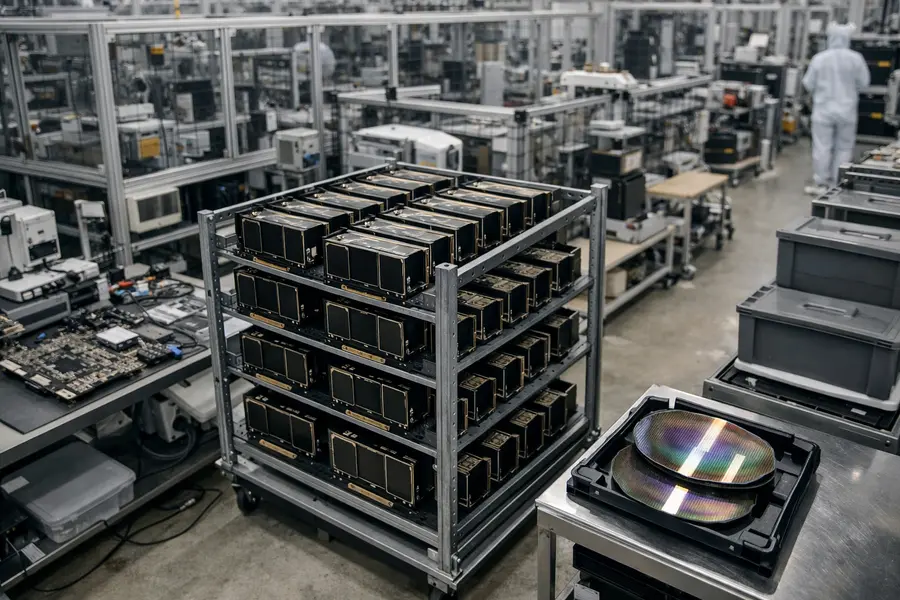
The Fortinet signing follows a series of manufacturing milestones that have changed the tenor of Intel foundry news in 2026. At the VLSI Symposium in June, Intel confirmed that 18A-P — the first performance enhancement on the 18A platform, delivering 9% higher throughput at equivalent power — had entered risk production on schedule. Earlier in the year, the company resolved persistent wafer-to-wafer bonding issues that had suppressed 18A yield rates, pushing yields to approximately 85% and monthly capacity to 30,000 wafers across Fab 52 in Chandler, Arizona, and a complementary Oregon facility, each contributing 12,000 to 15,000 units per month. The chip manufacturing lead ambition now has a production foundation behind it.
The first commercial 18A product — Panther Lake, Intel's laptop processor — is shipping. A next-generation 18A-PT variant, designed for chiplet stacking via through-silicon vias, is in development alongside a 14A roadmap that targets risk production in 2028 and mass production in 2029.
Market Reaction
INTC's single-session gain on July 21 reflected a convergence of catalysts rather than any single announcement. The expanded Google Cloud collaboration, disclosed July 16, calls for Gemini Enterprise deployment across Intel's engineering and supply-chain operations while adding dedicated computing capacity for chip-design workflows. The Apple preliminary agreement — reported as covering M-series laptop processor production on the 18A-P node with volume manufacturing targeting 2027 — added a supply-chain validation few analysts had projected for this year.
From a technical standpoint, the $100 recapture carries weight: INTC had traded below $40 at the nadir of the company's manufacturing crisis in late 2024. The 2026 re-rating reflects broad recognition that Intel's foundry trajectory has turned, though foundry losses are a persistent counter-argument. Intel Foundry posted $5.4 billion in total Q1 2026 revenue, up 16% year-over-year, but external revenue amounted to only $174 million — a figure that, despite representing a year-over-year jump exceeding 460%, illustrates the gap between technical credibility and commercial scale.
Strategic Context
Tan's foundry strategy rests on three levers. The first is process competitiveness: 18A's RibbonFET transistor architecture and PowerVia backside power delivery offer density and power-efficiency characteristics that Intel positions as differentiated for AI inference workloads, where energy cost per computation is a primary economic variable. The second is customer diversification — moving from an internal captive supplier to a model where Apple, Fortinet, and prospective hyperscaler clients anchor an external revenue base. The third is capital subsidization: Intel has secured approximately $8.5 billion in CHIPS and Science Act direct grants and access to roughly $11 billion in government loans, covering a material portion of its Arizona and Ohio fab construction costs.
For Apple, the Intel agreement diversifies production away from near-total reliance on TSMC at a moment when geopolitical considerations have elevated the cost of single-source dependency. For Intel, landing a brand-name consumer silicon customer validates the 18A node to an audience of potential fabless clients who track Apple's supply-chain decisions closely.
Competitive Landscape
The manufacturing gap with TSMC remains wide. TSMC is targeting approximately 180,000 wafers per month on its 3nm-class processes by year-end 2026, versus Intel's 30,000 on 18A — a disparity that reflects TSMC's decade-long head start in pure-play contract manufacturing. Samsung, the other established alternative, continues to manage yield challenges at the 3nm node, leaving Intel a realistic candidate for customers seeking to reduce TSMC concentration rather than replace it outright.
INTC stock's 160% year-to-date gain already prices in significant foundry progress. The investment debate centers on the timeline for external revenue to scale toward the level needed to close a foundry operating loss that reached $2.4 billion in Q1 alone.
What Comes Next
Intel reports Q2 2026 results after market close on July 23. Wall Street consensus calls for $14.42 billion in revenue and earnings per share of $0.21. The first quarter delivered $13.6 billion in revenue — up 7% year-over-year — a $3.7 billion net loss, and Data Center and AI segment growth of 22% to $5.1 billion. Investors will parse three items from Thursday's report: any update on external foundry bookings or backlog, the cadence of 18A capacity expansion, and incremental detail on the Apple manufacturing timeline. Tan's guidance on the pace at which external foundry revenue is expected to scale will set the near-term narrative for INTC.
Outlook
Intel's 18A foundry progress in mid-2026 marks the most credible manufacturing inflection the company has demonstrated since Pat Gelsinger launched IDM 2.0 in 2021. Yield normalization at 85%, a 30,000-wafer monthly run rate, the Fortinet signing, and a preliminary Apple commitment collectively move the business from proof-of-concept to early commercial traction. The structural test — converting those milestones into external revenue sufficient to close a multi-billion-dollar quarterly operating gap — remains unresolved. That transition will determine whether Intel's bid for the chip manufacturing lead translates into lasting enterprise value or remains a long-cycle reconstruction story priced for a best-case outcome.