Pomegra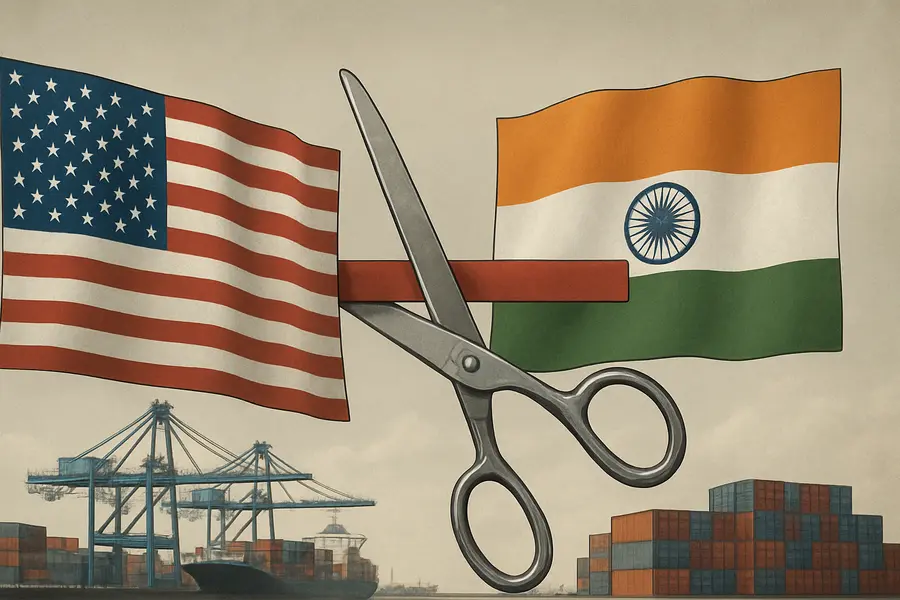
India is slashing tariffs on US goods and committing to $500 billion in American exports as the two nations race to finalize a full bilateral trade agreement before a critical July 2026 deadline.
- US reciprocal tariffs on Indian goods fell to 18% — down from a peak of 50% — following a February 2026 interim trade framework.
- India committed to eliminating tariffs on US industrial and agricultural goods and scrapping its digital services tax.
- Negotiations are in their final stage ahead of a July 24 deadline when the temporary 10% tariff window expires.
Lead
The US-India trade deal 2026 is entering its final stretch, with both governments signaling that the last unresolved issues cover no more than 1–2% of outstanding legal text. The February 2, 2026 interim framework — which cut US tariffs on Indian goods from a wartime high of 50% to 18% — has served as a bridge while negotiators work toward a comprehensive bilateral trade agreement. Commerce and Industry Minister Piyush Goyal and US Trade Representative Jamieson Greer held a two-day ministerial review in late June, covering market access, digital trade, non-tariff barriers, and strategic supply chains. A temporary 10% tariff ceiling expires July 24, 2026, adding hard-deadline urgency to talks that have otherwise moved steadily since last year.
What Happened
The arc of the current US India trade deal traces back to February 13, 2025, when President Donald Trump and Prime Minister Narendra Modi jointly launched the Bilateral Trade Agreement (BTA) negotiations in Washington. A year later, on February 2, 2026, both leaders announced an interim framework — the first tangible outcome of those talks.
Under the framework, Washington agreed to apply an 18% reciprocal tariff on originating Indian goods, covering a wide range of export categories including textiles and apparel, leather and footwear, plastic and rubber, organic chemicals, home décor, artisanal products, and select machinery. That 18% rate replaced a ceiling that had touched 50% during the peak of escalation.
On the Indian side, New Delhi committed to eliminating or substantially reducing duties on US industrial goods and a broad basket of US agricultural exports — including dried distillers' grains, red sorghum, tree nuts, fresh and processed fruit, soybean oil, and wine and spirits. India also agreed to remove its digital services tax and align itself with US expectations on fair digital trade rules.
In parallel, India pledged to purchase more than $500 billion in US products over five years, spanning energy, aircraft and aircraft parts, information and communication technology, precious metals, and coking coal — a commitment framed as balancing the bilateral trade ledger.
Negotiations Enter the Home Stretch
Trump India trade dynamics reached another milestone at the G7 summit in France in mid-June 2026, where Trump described the relationship with Modi as strong and the deal as "very close." Days later, US Ambassador to India Sergio Gor told reporters that talks were "down to the last 1 or 2%," suggesting the legal text was substantially complete.The late-June ministerial session between Goyal and Greer conducted what officials called a "comprehensive review" of the deal's core pillars: enhanced market access, supply chain resilience, digital trade frameworks, and the reduction of non-tariff barriers. Neither side indicated all differences had been fully resolved, but both reaffirmed the July 24 target as the operative deadline.
Why the July 24 Deadline Matters
The temporary 10% tariff band — a concessionary rate applied to Indian imports while negotiations were underway — is governed by a provision under Section 122 that expires July 24, 2026. If a permanent first-phase deal is not in place by that date, US import tariffs on most Indian goods would revert to standard Most Favored Nation rates, eliminating the preferential access India currently enjoys. That reset would complicate India tariff reduction efforts and risk reigniting trade tensions both sides have worked to de-escalate over the past 18 months.
Strategic and Geopolitical Context
The bilateral trade news between Washington and New Delhi reflects a strategic realignment that extends well beyond tariff schedules. Both governments have framed the BTA as part of a broader effort to deepen the US-India partnership across defense, technology, and critical minerals — sectors where China's dominance has made supply chain diversification a shared priority.
India's willingness to reduce tariffs on US agricultural products — historically a politically sensitive concession in New Delhi — signals how much the strategic calculus has shifted. Access to the US market and continued FDI in India's manufacturing sector, particularly in semiconductors and electronics, have outweighed domestic lobbying pressure from Indian farmers.
For the United States, the deal offers exporters improved access to a 1.4 billion-person market that remains one of the world's fastest-growing consumer economies. US energy companies, aircraft manufacturers, and tech firms stand to benefit most directly from the purchase commitments and reduced duty barriers.
Economic Dimension
The bilateral goods trade relationship was valued at approximately $130 billion in 2024. India ran a goods surplus with the United States — a central irritant for the Trump administration — which the $500 billion purchase pledge is explicitly designed to narrow. The interim agreement's tariff structure also supports India's ambition to attract supply chains relocating out of China, since lower US tariffs improve the economics of producing for the American market from Indian soil.
Outlook
With the July 24 deadline less than four weeks away, the political incentives on both sides point toward conclusion. Trump has sought trade deal wins with major partners throughout 2026; Modi needs to demonstrate that India's concessions on agricultural tariffs and digital taxes have delivered durable, preferential access to the US market. The remaining 1–2% of legal text is likely to involve the most contested provisions — precisely the issues that have resisted resolution for months. Whether negotiators clear that final hurdle before July 24 will determine whether this becomes a signed phase-one agreement or extends into another interim period.
Mentioned tickers: BA, LNG, AAPL, MSFT