Pomegra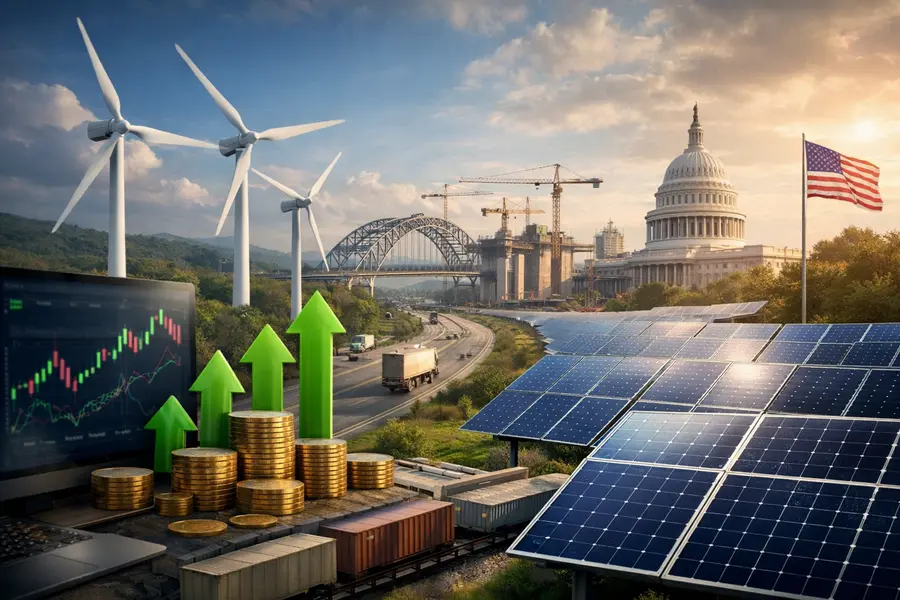
ICLN and renewable energy stocks are staging a durable comeback as AI-fueled electricity demand and US green energy infrastructure spending create a new structural investment cycle in 2026.
- The iShares Global Clean Energy ETF (ICLN) returned 47% in 2025 and has gained more than 26% year-to-date through mid-2026, outpacing the broader S&P 500 by a wide margin.
- AI data center power demand is repositioning green energy infrastructure as critical US infrastructure, shifting the investment thesis away from subsidy dependency.
- A July 4, 2026 federal tax credit construction deadline created a near-term earnings catalyst, pulling forward capital spending across the renewable energy sector.
Lead
Renewable energy stocks are posting their most sustained rally in years, fueled by a convergence of AI-driven electricity demand, accelerating US grid investment, and a structural repricing of green energy infrastructure as indispensable rather than discretionary. The iShares Global Clean Energy ETF (ICLN), with $3.02 billion in assets under management, delivered a 47% return in 2025 and has extended those gains by more than 26% year-to-date through April 2026 — nearly triple the S&P 500's 16% advance over the comparable period — as institutional capital rotates back into a sector once written off after the subsidy cycle faded.What Happened
For much of 2024 and early 2025, renewable energy stocks labored under a dual burden: rising Treasury yields that inflated the cost of capital for long-dated infrastructure projects, and political uncertainty over the durability of federal clean energy incentives. ICLN stock drifted below $14 in late 2024 before launching a recovery that, by mid-July 2026, has brought the ETF to near its 52-week high of $19.
The catalyst was not a change in Washington's posture toward renewables — it was a change in the underlying demand equation. US electricity consumption is now growing at 2.1% annually, driven primarily by AI-powered data center expansion, electric vehicle adoption, and onshoring of semiconductor and battery manufacturing. The US Energy Information Administration projects total electricity generation will expand between 25% and 50% through 2050, with solar and wind climbing from roughly 60% of the generation mix in 2025 to approximately 80% in its central scenario by mid-century.
Market Reaction
The S&P Global Clean Energy Transition index has gained 46% over the past twelve months, a spread of 30 percentage points over the broader S&P 500. ICLN surged 44% over the same one-year window as of mid-July 2026.
NextEra Energy (NEE), the largest US renewable generator with 43 gigawatts of operating capacity — more than half of it wind — traded near $88 in late July 2026. The company expects to bring as much as 14.5 GW of new wind capacity online by 2032 to meet long-term power purchase agreements signed with hyperscale data center operators. Constellation Energy (CEG), the country's largest private-sector power producer at 55 GW of capacity, is positioned at the intersection of nuclear baseload and corporate clean energy procurement. GE Vernova (GEV) reported a 71% surge in Q1 orders, driven almost entirely by AI-related power infrastructure demand. First Solar (FSLR), despite a 17% pullback from its recent monthly high, continues to post EBITDA margins near 50%, reflecting US manufacturing cost discipline and pricing power with domestic utilities.Strategic Context
The shift in narrative around US clean energy is structural. BloombergNEF estimated global energy transition investment reached a record $2.3 trillion in 2025, up 8% from 2024. Within the United States, the power sector accounts for the fastest-growing portion of that capital, as fossil fuel-based generation cannot be permitted, financed, and built quickly enough to meet the pace of new data center load additions.
The US grid is projected to add 11.7 gigawatts of new wind generation capacity in 2026 alone. Transmission bottlenecks, however, remain the sector's principal constraint, with interconnection queues stretched across multiple years in every major regional grid operator.
Policy Dimension
The One Big Beautiful Bill Act, signed into law in mid-2026, accelerated the phaseout timeline for key investment and production tax credits, setting a July 4, 2026 construction start deadline for projects seeking the maximum credit rate. The deadline functioned as a demand accelerant: developers rushed to break ground before the cutoff, lifting near-term revenue for equipment suppliers, engineering firms, and project developers.
The legislation also introduced Foreign Entity of Concern restrictions, effectively severing US credit-eligible projects from Chinese solar panel and battery supply chains. Domestic manufacturers — led by First Solar in thin-film photovoltaics — are the primary beneficiaries, while developers relying on lower-cost Asian imports face margin compression and sourcing pivots.
AI and Technology Angle
The AI infrastructure buildout has rewritten the demand model for renewable energy stocks in a way that prior policy cycles never did. Hyperscale cloud providers — including operators of the largest US data center campuses — have committed to sourcing 100% of their electricity from clean sources, signing multi-decade power purchase agreements at prices that underwrite new renewable project financing without federal credit dependency.
GE Vernova's order book surge exemplifies how green energy infrastructure companies with exposure to grid modernization, gas turbines, and large-scale wind turbines are capturing the intersection of AI power demand and decarbonization targets simultaneously.
What Comes Next
The selective nature of the current rally is drawing attention from institutional allocators. Unlike the broad 2020–2022 expansion, where the entire renewable energy sector re-rated on stimulus expectations, the 2025–2026 run is differentiated: companies with contracted backlogs, domestic supply chains, and grid-facing revenue are outpacing those with policy-dependent, merchant-market exposure.
Treasury yields remain a watch item. At 4.30%, the 10-year benchmark keeps financing costs elevated for capital-intensive projects. A sustained decline toward 3.75% would provide meaningful relief for project IRRs and could extend the current rally into a broader re-rating.