Pomegra
Houthi missile and drone strikes on Saudi airports and Aramco sites have killed 20 and ended the 2022 truce, pushing Brent to a five-month high near $110.
- Houthi attacks on three Saudi airports from October 6 to 12 killed at least 20 people and injured more than 370.
- Brent settled at $109.86 on October 16, up 3.7% on the day and the highest close since May.
- The 2022 UN-brokered truce has collapsed, and the Houthis have declared a blockade on Saudi Arabia.
Lead
Houthi forces in Yemen have struck Saudi Arabia's civilian aviation network and the headquarters of Saudi Aramco (2222.SR) in Dhahran. The attacks killed at least 20 people, injured more than 370 and formally ended the 2022 truce that had held for most of four years. The crude oil price responded: Brent futures touched $110 a barrel on October 16 for the first time since May and closed at $109.86. US benchmark West Texas Intermediate closed at $101.41, up 3.5% on the day and more than 10% on the week.
What Happened in the Houthi Attacks on Saudi Arabia?
Between October 6 and 12, Houthi ballistic missiles and drones hit King Khalid International Airport in Riyadh, King Fahd International Airport in Dammam and Abha International Airport in the south. The deadliest day was October 10, when a strike on the terminal 3 and 4 complex at King Khalid killed 13 people and injured 308, collapsing sections of the ceiling. Earlier strikes on October 6-7 and October 8 killed three people each, and a Saudia Airbus A320 was destroyed on the ground on October 8. A further death was recorded on October 11. All three missiles fired on October 12 were intercepted.
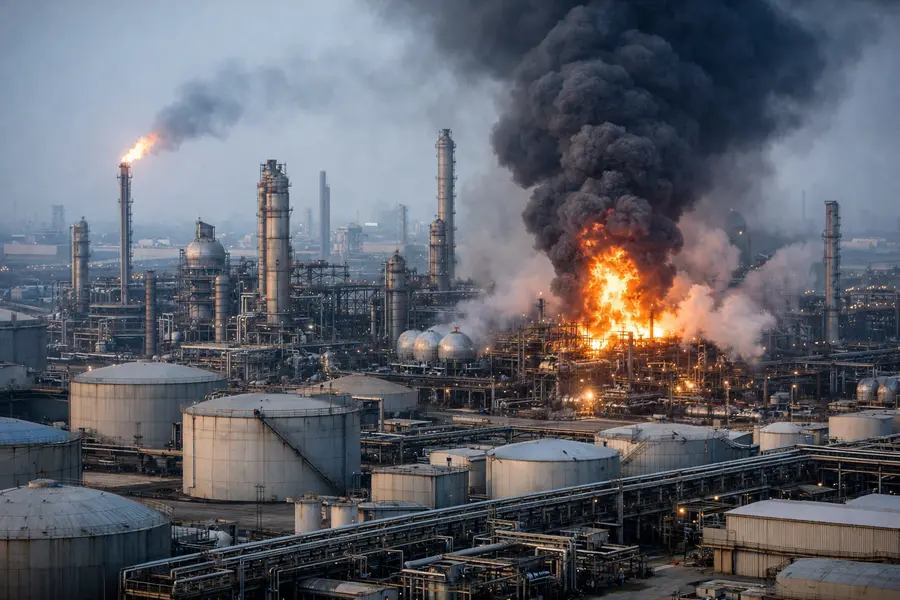
On the night of October 13, an attack on an administrative building at Aramco's Dhahran base started a fire that spread across several floors. Whether the building was struck directly or hit by debris from intercepted munitions was not immediately clear. The Houthis have since vowed further attacks on airports and oil facilities, framing them as retaliation for Saudi strikes on Yemen.
How Did the 2022 Truce Collapse?
The truce broke down after Saudi strikes on Sanaa International Airport on July 13, which led the Houthis to end the UN-brokered arrangement, impose a blockade on Saudi Arabia and launch large-scale offensives. The October airport campaign is the first sustained Houthi assault on Saudi civilian infrastructure since the truce took effect in April 2022. It also comes as the US-Iran confrontation in the Gulf has widened the conflict's regional backdrop.
The Saudi-led coalition called the airport attacks a "full-fledged war crime" and pledged to respond decisively. The Saudi energy minister warned of a serious response. United Nations Secretary-General Antonio Guterres described the strikes as a grave escalation, and more than 40 countries, including the United States, the United Kingdom and EU members, condemned them.
Why Is the Crude Oil Price Rising?
The crude oil price is rising because three supply threats have converged, with Saudi Arabia, the world's largest crude exporter, now directly exposed. Iran has stepped up attacks on commercial shipping in the Strait of Hormuz. Ukraine continues to strike Russian refineries. The Houthi campaign adds risk to the kingdom's own infrastructure and to the Red Sea route through Yanbu, the main outlet that bypasses the Persian Gulf.
Brent gained about 5% over the week to October 16, while WTI rose by more than 10%, narrowing the spread between the two benchmarks to about $8.45. The move lifts crude back into triple-digit territory, which feeds directly into retail fuel costs, transport and manufacturing overhead. That adds pressure to global inflation at a time when central banks are still weighing the pace of policy easing.
Geopolitical Dimension
The strikes alter the strategic balance between Riyadh and Tehran's regional allies. Since 2019, Houthi attacks on Saudi energy assets have repeatedly shown how a small-cost drone or missile can disrupt a large share of global spare capacity. The current campaign differs in target selection. Airports carry civilian traffic, and the damage is visible in the aviation sector: hundreds of flights have been cancelled, and carriers including Air India, Lufthansa (LHA) and Pakistan International Airlines have suspended Riyadh services. King Khalid International remained closed through October 17.
For Saudi Arabia, the attacks complicate the economic diversification agenda that depends on tourism, aviation hubs and foreign investment. They also test the kingdom's air defences, which intercepted the October 12 salvo but failed to prevent earlier casualties.
What Comes Next for Oil Prices?
Oil prices are likely to stay sensitive to Gulf security headlines over the next three to twelve months. The central question is whether the Houthis or Iran move from airports and administrative sites to production, processing or export facilities. Aramco's Abqaiq processing plant, the Ras Tanura terminal and the Yanbu export hub are the nodes that would tighten physical supply. Past attacks on such sites, including the 2019 Abqaiq strike, caused sharp but short-lived price spikes. The present risk is different because it overlaps with disruption in Hormuz and on Russian refining.
A decisive Saudi military response could widen the conflict and raise insurance and freight costs on Red Sea and Gulf routes. A negotiated return to the truce would remove part of the risk premium, but no talks are under way. Producers outside the region, including US shale operators, stand to benefit from prices above $100, while importers in Asia and Europe face higher energy bills.
Outlook
The Houthi campaign has turned a dormant front into an active threat to the Gulf's largest oil producer. With Brent near $110, the truce gone and Hormuz shipping under pressure, energy markets are pricing a sustained supply-risk premium. The next signals are the scale of Saudi retaliation, the reopening of Riyadh's airport and any strike on export infrastructure.