Pomegra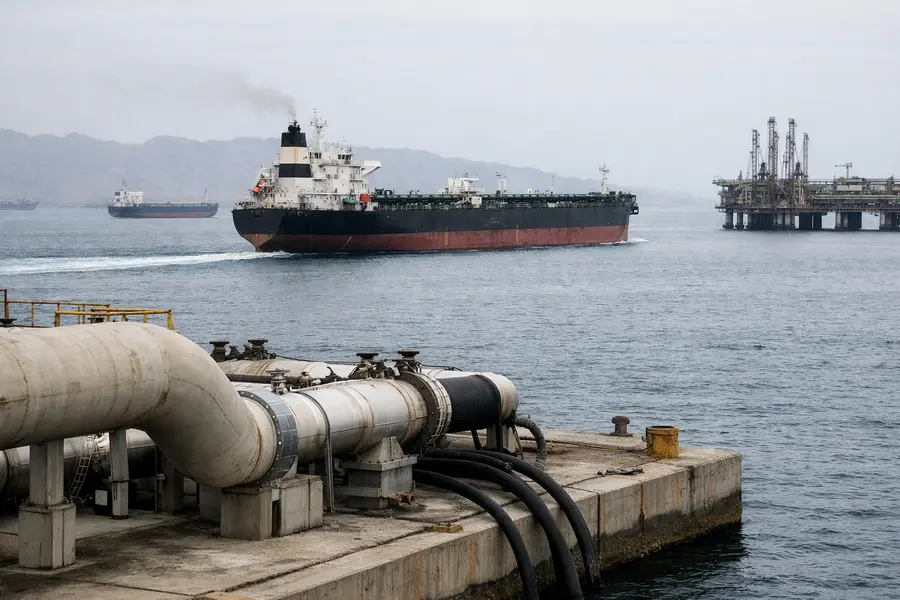
Iran's conditions for Hormuz reopening push a deal further away, leaving the S&P's record close and Brent's 7% weekly drop exposed to unpriced escalation risk.
- S&P 500 closed at a record 7,757.64 on Aug. 7, priced for a Hormuz deal Iran says requires U.S. concessions not yet on the table.
- Brent fell more than 7% on the week to near $82, pricing in a Hormuz reopening that Tehran says will not happen without U.S. compliance.
- Iran's Oman framework bans U.S. and Israeli vessels and levies 20%-of-cargo fines, leaving oil asymmetry sharply skewed to the upside on any breakdown.
Lead
The S&P 500 closed at a record 7,757.64 on Friday, August 7 — its best weekly performance since April — after a surprise decline of 23,000 U.S. payroll jobs in July cooled federal-funds-rate-hike expectations and pushed the CME FedWatch probability of a Fed hold to 55.9%. On the same session, Brent crude settled near $82 a barrel, nursing a weekly loss of more than 7%, as markets priced a near-complete Iran-Oman shipping accord for the Strait of Hormuz. By August 8, Tehran had warned that any agreement with Oman would not by itself reopen the waterway, conditioning a full resolution on U.S. sanctions relief, financial compensation, and compliance with commitments made under a June memorandum of understanding. Both asset classes are now priced for an outcome that moved further away over the weekend.
What Happened
The Hormuz crisis traces to the 2026 U.S.-Iran conflict, which disrupted traffic through the strait for most of the year. A two-week ceasefire in April provided temporary safe passage; a broader memorandum of understanding followed in June. Iran subsequently resumed attacks on commercial shipping, accusing Washington of violating the June MoU. The U.S. responded with retaliatory strikes in July. By late July, Brent had briefly surged above $90 per barrel as President Donald Trump threatened intensified military action, and Iranian Revolutionary Guard Corps commanders warned of retaliation against countries supporting U.S. operations.
The diplomatic track shifted in early August. Iran and Oman reported near-agreement on lane coordinates: inbound traffic through a northern corridor in Iranian territorial waters, outbound through a southern lane in Omani waters. Markets moved immediately on the prospect of Persian Gulf crude returning to global supply chains. Brent fell more than 7% over the week ending August 7; the S&P 500 simultaneously closed at its 25th record high of 2026.
The Gap Between Price and Reality
Iran's August 7–8 statements reframe the calculus. Foreign Minister Abbas Araghchi confirmed the Oman framework is "very close" while adding that full Hormuz reopening remains "subject to other conditions" — chiefly U.S. sanctions relief and compensation for what Tehran characterizes as ceasefire violations. The draft framework bars U.S. and Israeli vessels from the strait entirely and imposes fines equivalent to 20% of cargo value on violators, a provision Washington has not accepted.
Washington's stated position holds that Iran does not control the Strait of Hormuz and that any arrangement must guarantee unrestricted transit rights under international maritime law. The two core positions are structurally incompatible in their current form. Oman's mediation role provides procedural momentum but cannot bridge a sovereignty dispute of this magnitude.
Oil Asymmetry
The oil asymmetry embedded in Friday's close is acute. Brent's 7% weekly decline assumes the Oman deal closes quickly and on terms that release five-plus months of pent-up Persian Gulf supply into world markets. The probability-weighted downside — a deal that stalls, collapses, or triggers resumed U.S. strikes or Iranian shipping interdictions — points Brent back toward the $90-plus range reached in late July, a move of more than 10% from current levels. The inverse is bounded: if the deal closes on terms that remain unacceptable to Iran as of this writing, the incremental crude upside is marginal, as most of the supply-return trade has already been priced in.
OPEC+ policy compounds the exposure. Member states calibrated output in anticipation of Hormuz normalization. Any reversal would require a rapid supply-side adjustment that cartel decision-making timelines make structurally difficult before significant price appreciation has occurred.Geopolitical Dimension
The impediment is not procedural but strategic. Iran seeks to establish recognized sovereign authority over the world's most consequential maritime chokepoint — through which roughly 20% of global oil supply transited before the crisis — as leverage for a durable diplomatic settlement that includes economic relief. The United States and its allies regard any Iranian fee-collection or vessel-exclusion regime as an unacceptable precedent under the United Nations Convention on the Law of the Sea.
The June MoU that was intended to conclude the conflict remains disputed in its interpretation. Iran's insistence on U.S. compliance before reopening the strait signals that Tehran regards the maritime negotiation as continuous with the broader peace process, not a standalone confidence-building step that can be sequenced ahead of sanctions relief. That framing is unlikely to change before a wider political framework is agreed.
Equity Vulnerability
The record high in equities reflects two simultaneous tailwinds: Fed rate-hike expectations cooling sharply on July's payroll miss, and geopolitical risk premium draining from asset prices on Hormuz deal optimism. If the deal delays materially or deteriorates — triggering a renewed oil spike toward $90 and a fresh round of military exchanges — both tailwinds reverse simultaneously. A supply shock of that magnitude historically tightens financial conditions, dampens consumer spending, and compresses margins in energy-intensive sectors. The S&P 500's current positioning leaves limited cushion for a scenario in which unpriced escalation re-enters the market as the dominant variable.
Outlook
The Iran-Oman framework is closer to completion than at any point since the Hormuz crisis began, but Iran's stated conditions for full reopening — sanctions relief, compensation, and U.S. acknowledgment of ceasefire violations — remain unmet. Washington and Tehran hold structurally incompatible positions on strait sovereignty. Until that gap narrows, the asymmetric risk profile is skewed against the consensus. A breakdown pushes Brent sharply higher and pressures equities; a deal on terms acceptable to all parties offers only modest incremental crude upside, having been largely anticipated. For markets priced for resolution, the consequential tail remains the one they are not pricing.
Mentioned tickers: SPY, USO, BNO, XLE, OXY, HAL, SLB, CVX, XOM