Pomegra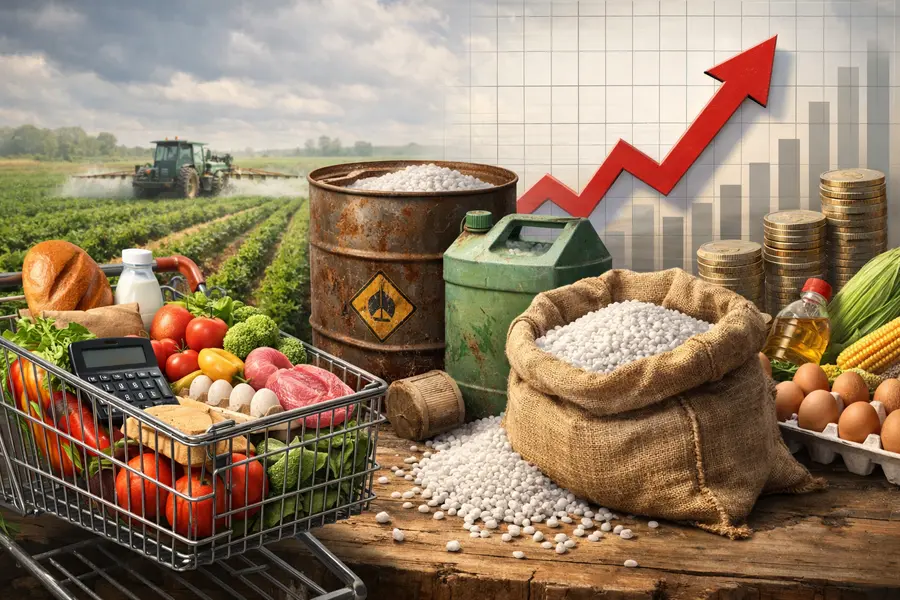
A supply-chain shock rooted in the Strait of Hormuz conflict has sent fertilizer costs surging 35 percent, threatening to push grocery prices sharply higher in the second half of 2026 and well into 2027.
- Urea prices surged nearly 46 percent month-on-month in early 2026 after the Strait of Hormuz closure halted a third of global fertilizer trade.
- USDA projects corn acreage to fall to 93 million acres in 2026, down from 99 million in 2025, as input costs make planting uneconomical.
- Fresh vegetable prices were already 11.9 percent higher in May 2026 than a year earlier; a diminished harvest points to further acceleration.
Lead
The 2026 global agriculture season is entering its most consequential phase against a backdrop of acute fertilizer shortage — the direct consequence of the Iran war and the near-total closure of the Strait of Hormuz. Since the end of February 2026, an estimated 3.9 million tonnes of fertilizer exports from Gulf states have been suspended, equal to 30 percent of those countries' annual shipments. With planting decisions already locked in and harvest season approaching, economists and agricultural agencies warn that the resulting yield losses will translate into accelerating food inflation forecast 2026 models had not fully priced.
What Happened
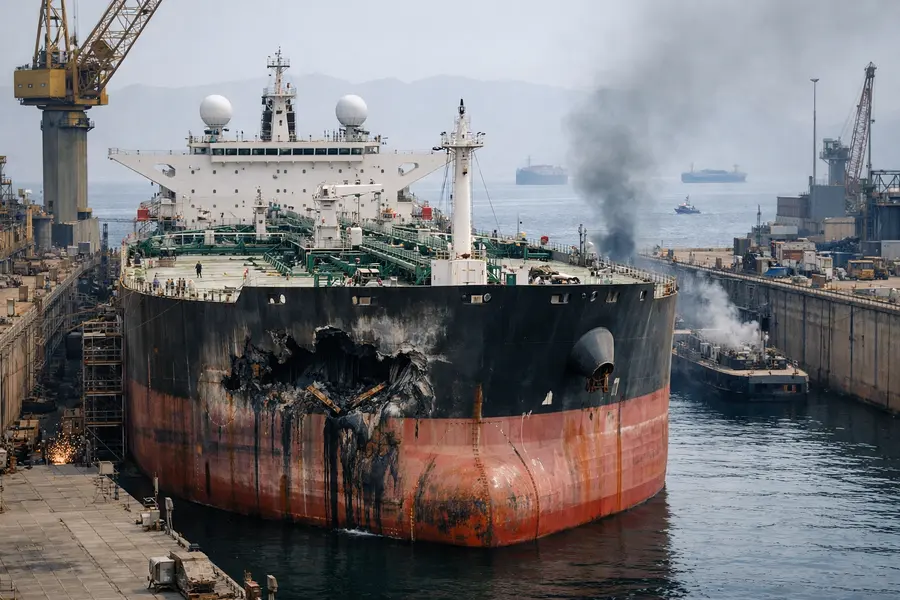
The trigger was the Strait of Hormuz. Military operations disrupted tanker traffic by more than 95 percent at their peak, severing the corridor through which roughly one-third of the world's traded fertilizers — nitrogen compounds, potash, phosphate — normally flow. Urea, the world's most widely used nitrogen fertilizer, saw prices roughly double in the weeks following the closure, with a single month-on-month surge of nearly 46 percent recorded between February and March. By May, the global fertilizer price index was tracking more than 35 percent above the same period in 2025; urea prices in the Middle East remained 75 to 108 percent above pre-conflict levels.
The disruption compounded pre-existing pressures. Russia's ongoing exclusion from Western agricultural commodity markets had already tightened nitrogen supply, while El Niño-linked weather patterns reduced output in key producing regions. The Hormuz closure added a structural bottleneck that alternative shipping routes — via the Cape of Good Hope — cannot fully offset given longer transit times and constrained vessel availability.
Agricultural Impact
The immediate consequence has been a dramatic shift in global agriculture planting decisions. The USDA projects corn acreage will fall to approximately 93 million acres in the 2026 season, a sharp decline from the nearly 99 million acres planted in 2025. Corn's heavy dependence on nitrogen fertilizer made it the primary casualty; farmers pivoted to soybeans, which fix atmospheric nitrogen and require significantly less synthetic input.
That substitution carries its own costs. The American Farm Bureau Federation reports that roughly 70 percent of U.S. farmers are unable to afford all the fertilizer they need this season, with producers in the Southern region most severely affected — 78 percent unable to secure required inputs. Internationally, the picture is starker. Brazil, which relies on imports for the vast majority of its fertilizer needs and sources approximately 40 percent of those imports through the Strait of Hormuz, saw local fertilizer prices jump more than 35 percent in the first two weeks of the conflict. Sub-Saharan Africa, particularly East Africa, faces similar exposure, with one-third of its fertilizer supplies originating in Gulf states.
The Food and Agriculture Organization has issued formal warnings that fertilizer scarcity will reduce yields in the 2026 harvest and tighten food supplies through the first half of 2027. Farmers who delayed application or reduced rates in response to cost will see reduced per-acre output, a production shortfall that will only become fully visible when crops are harvested in the third and fourth quarters.
Grocery Price Outlook
Current grocery prices data already reflect the upstream cost shock. Retail fresh vegetable prices were 11.9 percent higher in May 2026 than in May 2025, with tomatoes recording a 32 percent increase. The USDA's Food Price Outlook projects food inflation forecast for fresh vegetables at 7.7 percent for the full year. Broader food-at-home prices are projected to rise 2.8 percent annually, though economists surveyed by the Food Marketing Institute caution that figure could reach 4.5 percent if geopolitical conditions remain unresolved.
The lag structure of agricultural supply chains means the sharpest price increases have not yet arrived. Fertilizer applied — or not applied — during spring planting season determines fall harvest volumes; those volumes determine retail prices six to eighteen months later. The supply damage from the 2026 fertilizer shortage will show up most forcefully in grocery prices in the final quarter of 2026 and early 2027, the period analysts now flag as the highest-risk window for food cost acceleration.
Geopolitical Dimension
The concentration of fertilizer production and trade in politically volatile corridors has exposed a structural vulnerability in global food security that policymakers had long acknowledged but not resolved. The Gulf states — Qatar, Saudi Arabia, and the UAE among them — collectively account for a substantial share of globally traded urea and ammonia. The Strait of Hormuz is effectively a chokepoint for agricultural inputs as much as for hydrocarbons.
South Asia faces compounding risks. India, Pakistan, and Bangladesh depend heavily on Middle Eastern fertilizer imports and have limited short-term substitutes; their exposure, combined with the high sensitivity of staple crops — rice, wheat — to nitrogen availability, raises the risk that localized crop failures translate into acute food insecurity. The World Bank's Food and Nutrition Security Update for 2026 has flagged the region as among the most vulnerable globally.
Import-diversification efforts are underway, with several governments accelerating procurement from Canadian and Moroccan producers, but logistical and production constraints limit how quickly new supply can reach farmers.
Outlook
The 2026 fertilizer shortage is not a transient price spike but a structural disruption with a multi-season tail. Harvest shortfalls resulting from reduced spring fertilizer application will sustain upward pressure on global agriculture commodity prices through at least the first half of 2027. For consumers, the most acute phase of food inflation forecast 2026 models now centers on the second half of this year, when reduced harvests meet still-elevated input costs. Grocery price moderation remains contingent on a resolution of Hormuz access and the normalization of fertilizer trade flows — neither of which appears imminent.