Pomegra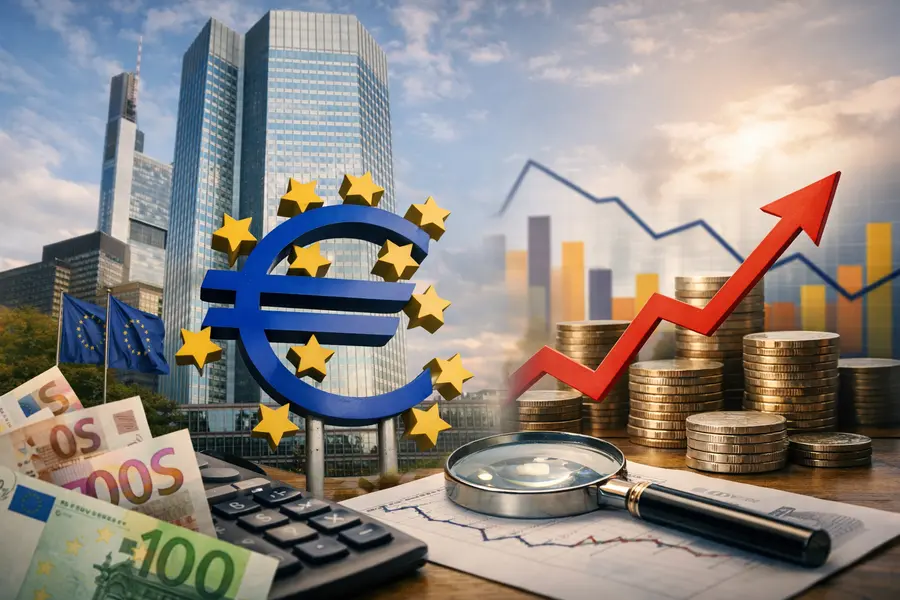
Euro-area flash HICP accelerated to 2.9% in July 2026, beating June's 2.8% reading, as energy prices surged 10%, tightening the policy dilemma at ECB Frankfurt ahead of its September meeting.
- Euro-area flash HICP rose to 2.9% in July 2026, up from 2.8% in June, with energy inflation jumping to 10.0% from 8.5%.
- Germany's preliminary CPI beat expectations at 2.8% while Q2 GDP grew 0.2% quarter-on-quarter, topping the 0.1% consensus.
- Markets now assign a 70% probability to an ECB rate hike in September, lifting the German 10-year Bund yield to around 3.14%.
Lead
Eurostat's flash estimate, released Friday August 1, showed euro-area consumer prices rising 2.9% year-on-year in July 2026 — above both June's 2.8% reading and the European Central Bank's 2% target — as energy costs surged 10.0% annually amid renewed Middle East supply disruption. The data arrived one day after Germany delivered a double beat on preliminary inflation and flash GDP, narrowing the room for policy hesitation at ECB Frankfurt and triggering an immediate repricing of September rate expectations across European bond markets.
What Happened
Eurostat's flash HICP estimate confirmed energy as the dominant driver, accelerating sharply from 8.5% year-on-year in June to 10.0% in July as renewed US-Iran hostilities pushed oil prices higher. Services inflation edged up to 3.3% from 3.2%, and non-energy industrial goods rose to 0.9% from 0.7%. Only food, alcohol and tobacco provided relief, easing to 1.2% from 1.5%.
Core inflation — stripping out energy, food, alcohol and tobacco — climbed to 2.5% from 2.4% in June, signalling that price pressures are broadening beyond the volatile energy component. The combination of accelerating headline and core measures reinforced the case that July's move is not a transitory spike.
Germany Sets the Tone
The Thursday data from Germany's Federal Statistical Office foreshadowed the eurozone-wide outcome. German preliminary CPI rose 2.8% year-on-year in July, exceeding analyst expectations of 2.7% and marking the highest reading since April. German energy inflation surged to 8.3% from 3.4% in June, the sharpest monthly acceleration in the component in over a year. Core inflation held at 2.4%, and on a monthly basis, German consumer prices rose 0.8%.
The same morning delivered a GDP upside surprise. German flash Q2 2026 gross domestic product expanded 0.2% quarter-on-quarter, beating the 0.1% consensus, with the annualized pace reaching 0.9% against the 0.6% forecast and Q1's 0.4% reading. Stronger growth alongside hotter inflation left Frankfurt with considerably less policy flexibility than it entered the summer with.
Divergence Across the Bloc
Country-level readings revealed uneven pressures across the currency union. Spain remained the bloc's outlier, with annual inflation at 3.8%, up from 3.6% in June. Italy edged down to 2.9% from 3.0%, while France moved higher to 2.4% from 2.0%. Germany's jump from 2.4% to 2.8% reflected both the energy pass-through and stickier domestic services costs.
The breadth of the uptick — three of the eurozone's four largest economies recording acceleration — reduced the probability that July's headline move could be dismissed as country-specific noise.
Market Reaction
Bond markets repriced sharply after the data sequence. Germany's 10-year Bund yield, the euro-area benchmark, climbed to approximately 3.14%, near its highest level since late May. The rate-sensitive two-year Bund yield rose to around 2.79%. EUR/USD traded near 1.15 as investors recalibrated the ECB rate path. Brent crude, the critical input to the energy inflation trajectory, advanced 2.2% on renewed supply concerns, threatening to extend the energy component's upward momentum into August.
ECB's Tightening Dilemma
The ECB left rates unchanged at its July Governing Council meeting, one month after June's 25-basis-point increase — the first hike in three years — driven by rising energy prices and persistent inflationary pressure. Officials maintained a data-dependent, meeting-by-meeting framework and reiterated commitment to returning price growth to 2%.
Frankfurt's policymakers face a structurally difficult bind. The energy surge is largely supply-driven and geopolitically rooted, making demand-side tightening a blunt instrument. Yet with core inflation at 2.5% and services at 3.3%, domestic price dynamics have not been fully anchored. The purchasing power of euro coins and banknotes across the bloc continues to erode above target, sustaining political pressure on the Governing Council to act.Markets price a 70% probability of a September hike — a significant repricing from the more dovish tone struck at June's Sintra forum, where ECB officials had signalled less urgency for additional tightening.
Outlook
July's 2.9% flash print and Germany's GDP beat leave the ECB's September 11 meeting finely balanced. Energy-driven inflation could moderate if geopolitical pressures ease, but with core and services readings both moving higher, the data-dependency argument increasingly supports a further 25-basis-point increase. Germany's final Q2 GDP figures, due August 12, and the next Eurostat HICP flash estimate, due in early September, will be decisive inputs before the Governing Council convenes.