Pomegra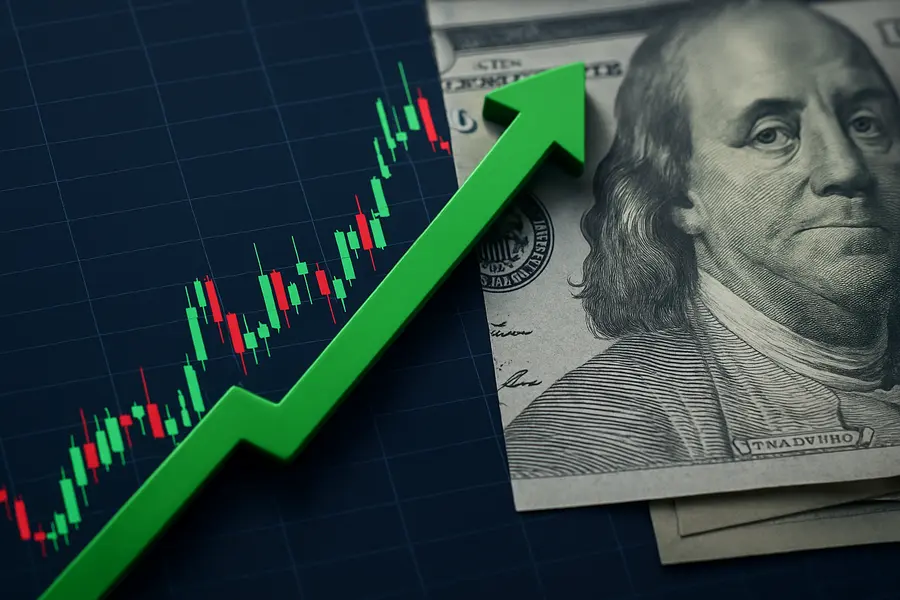
E-mini S&P 500 futures pointed to a higher open Thursday as a weaker-than-expected June payrolls print reduced Federal Reserve rate-hike odds and drove the Dow Jones to a record close.
- June nonfarm payrolls rose just 57,000 — roughly half the 115,000 consensus — reducing near-term rate-hike risk.
- The Dow closed at an all-time high of 52,900.07, advancing 595 points; the S&P 500 added 0.49%.
- U.S. equity markets are closed Friday, July 3; trading resumes Monday, July 6.
Lead
E-mini S&P 500 contracts climbed into positive territory in the premarket hours Thursday, July 2, 2026, after the Labor Department's June employment report came in well below forecasts, shifting the Federal Reserve policy calculus toward an extended rate hold. S&P 500 futures, which had traded with a slight negative bias in the early overnight session, extended gains following the 8:30 a.m. ET data release. The stock market open reflected the reversal, with the Dow Jones Industrial Average reaching a fresh closing record as traditional sectors absorbed capital rotating away from high-multiple technology names.What Happened
The June nonfarm payrolls report was the session's dominant catalyst. The economy added a seasonally adjusted 57,000 jobs last month, against the Dow Jones consensus estimate of 115,000 — the softest monthly print in more than a year. Prior estimates were also revised lower, with April and May figures cut by a combined 74,000 jobs.
The unemployment rate edged down to 4.2% from 4.3%, and average hourly earnings rose 0.3% for the month, maintaining a 3.5% annual rate. Initial jobless claims filed last week fell to 215,000, slightly below the 219,000 forecast, offering a modest counterpoint to the headline miss but not enough to alter the market's broader read on labor market direction.
Market Reaction
The market morning update captured a clear split across asset classes. The Dow Jones Industrial Average closed up 595 points, or 1.14%, at 52,900.07 — a new all-time closing high — as financials, consumer staples, and defensive sectors led. Apple (AAPL) gained 4.8%, providing the Dow its largest single-stock contribution. Visa (V) and Walmart (WMT) each added roughly 3%.
The S&P 500 finished with a more modest 0.49% gain, reflecting the drag from technology. The Nasdaq Composite declined 0.8% as the semiconductor sector extended its recent consolidation after roughly doubling during the second quarter of 2026. The Russell 2000 small-cap index slipped 0.39%.
Tesla (TSLA) fell 7% despite reporting second-quarter vehicle deliveries that surpassed consensus estimates — a textbook sell-the-news reaction in a stock trading at elevated valuations with aggressive embedded expectations.Fed Rate Outlook
The soft employment reading directly strengthened the case for the Federal Reserve to hold the federal funds rate steady through at least the third quarter. With nonfarm payrolls running at roughly half the expected pace and prior months revised downward, policymakers now have explicit cover to maintain current policy settings and monitor incoming inflation data before acting.
Rate-sensitive futures contracts moved to reflect reduced probability of any adjustment at the Fed's next policy meeting. Average hourly earnings at 3.5% annually remain above the central bank's 2% inflation target but are trending in the right direction. Initial claims at 215,000 indicate layoffs are not accelerating, which removes any urgency for emergency cuts.
The net market read: the soft-landing narrative received fresh supporting data Thursday.
Sector and Rotation Context
The divergence between the Dow's record close and the Nasdaq's decline crystallized a rotation that accelerated in late June and carried into the first trading days of July. After semiconductors roughly doubled during the second quarter of 2026, institutional flows shifted toward value-oriented sectors — industrials, healthcare, and financial services — that had lagged the AI-driven chip rally.
Apple's outperformance distinguished the large-cap, diversified technology segment from pure-play semiconductor names. With a consumer-facing revenue model, active share buyback program, and expectations anchored more modestly than chipmakers, Apple attracted capital from investors looking for quality technology exposure without the sector's recent volatility premium.
Holiday and Calendar Context
U.S. equity markets — both the NYSE and Nasdaq — will be closed Friday, July 3, in observance of Independence Day. Electronic futures contracts including S&P 500 futures and E-mini instruments continued trading through the holiday period, with the September 2026 E-mini S&P 500 contract ranging between 7,520.25 and 7,593.75 during Thursday's session. Regular trading resumes Monday, July 6.
The earnings calendar for the second week of July will be the next major market-moving catalyst, with major financial institutions scheduled to report second-quarter results.
Outlook
E-mini S&P 500 futures head into the Independence Day break against a constructive backdrop: a Dow at record levels, materially reduced rate-hike expectations, and a broadening rotation that extends equity participation beyond the semiconductor cluster. The June payrolls miss reinforces the view that the Fed's next policy action, if any, is more likely to be a cut than a hike — a structural support for equity valuations at current levels.Near-term risks center on second-quarter earnings guidance, particularly within technology, and any recalibration of Fed messaging at the July meeting. Semiconductor stocks remain the segment most exposed to further volatility given the magnitude of their first-half appreciation.
Mentioned tickers: ES=F, MES=F, SPY, AAPL, TSLA, V, WMT