Pomegra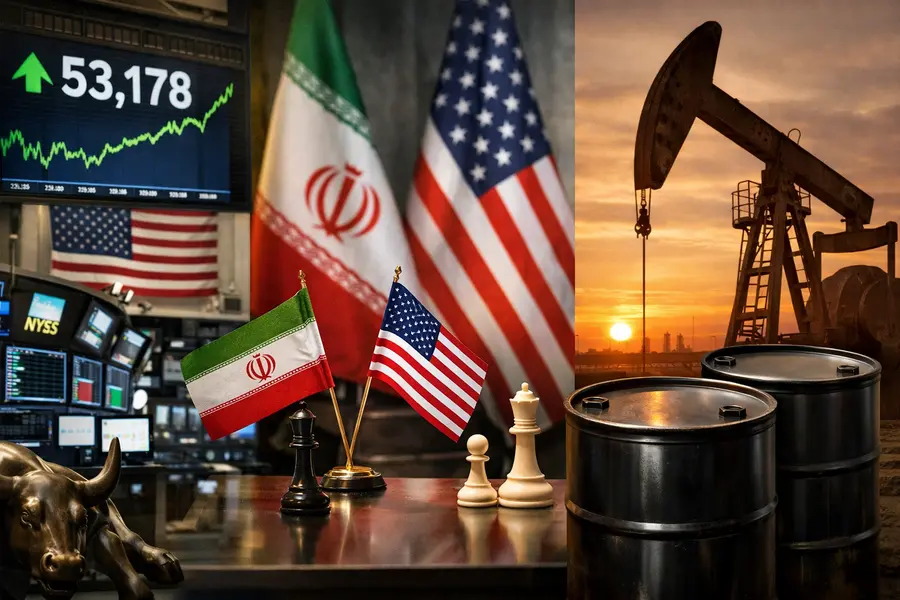
The Dow Jones board surged to an all-time high of 53,178.41 Monday as WTI crude plunged 9% and President Trump scrapped a planned Iran strike, igniting a broad wall street bull rally.
- Dow Jones Industrial Average closed at a record 53,178.41, up 693 points (+1.32%), on August 3, 2026.
- Brent crude sank more than 7% below $84/barrel; WTI broke below $80 after Trump called off an Iran military strike.
- Amazon surged 4.6% past a $3 trillion market cap; six stocks drove roughly 87% of the Dow's point gain.
Lead
Wall Street's Dow Jones board posted its highest close in history on Monday, August 3, settling at 53,178.41 after gaining 693.38 points — a 1.32% advance — as a single geopolitical pivot erased weeks of risk premiums embedded in equities and energy markets simultaneously. President Donald Trump announced he had called off a planned U.S. military strike against Iran and signaled fresh diplomatic talks, triggering an immediate collapse in oil prices and a synchronized rotation into risk assets that lifted all three major U.S. indices to strong gains.
What Happened
The session opened in cautious positive territory before the Iran headline accelerated buying across sectors. By the close, the S&P 500 had added 1.48% to reach 7,600.50, while the Nasdaq Composite climbed 2.1% to 25,913.90, with megacap technology stocks leading the advance.
Energy markets registered the day's most dramatic moves. Brent crude fell more than 7%, retreating below $84 per barrel — its sharpest single-session decline in months — while WTI dropped more than 9%, breaking decisively below $80 per barrel. The pullback reflected an immediate repricing of the geopolitical risk premium that had pushed petroleum prices sharply higher through July as tensions with Iran escalated.The CBOE Volatility Index (VIX), Wall Street's fear gauge, fell to 15.99, signaling a return to orderly market conditions from the elevated readings seen during the preceding weeks of Middle East uncertainty.
Market Reaction
The breadth and force of Monday's rally underscore how deeply geopolitical anxiety had suppressed equity valuations heading into the session. Six stocks accounted for roughly 87% of the Dow Jones Industrial Average's point gain, with concentration in large-capitalization technology and consumer names.
Amazon was the standout mover, surging 4.6% to cross the $3 trillion market capitalization threshold for the first time — a milestone that places it alongside Apple and Nvidia in the exclusive tier of companies to have achieved that valuation. The rally in megacap tech reflected dual relief: lower energy costs reduce operational expenses for cloud infrastructure, and a de-escalated geopolitical environment diminishes the probability of sanctions-related supply-chain disruptions.Airlines, consumer discretionary, and industrials also advanced, consistent with historical patterns in which falling oil prices translate rapidly into improved margin expectations for fuel-intensive industries.
Geopolitical Dimension
The catalyst for Monday's move was unambiguous. Trump's decision to abandon a planned military strike on Iran — announced during a period of heightened bilateral tension — and to pursue diplomatic engagement instead reversed a narrative that had dominated markets for most of July. The prospect of direct U.S.-Iran conflict had raised the specter of supply disruptions across the Strait of Hormuz, through which approximately 20% of global oil trade passes.
The shift from confrontation to negotiation compressed that supply-disruption premium almost entirely within a single session. Oil traders who had built defensive long positions in crude futures were forced to unwind rapidly, amplifying the price decline. The move is consistent with the wall street bull case that energy-driven inflation — a persistent headwind for Federal Reserve policy — may now ease more quickly than consensus projected entering August.
Strategic Context
For institutional investors, the session marks an inflection point in a months-long debate about whether geopolitically elevated oil prices would force the Federal Reserve to hold rates higher for longer. Brent below $84 and WTI below $80 materially alter that calculus. If sustained, the decline in petroleum prices feeds directly into consumer price index components — most acutely gasoline, transportation, and utility costs — which the Fed monitors closely as it considers the pace of any further rate adjustments.
Corporate earnings also intersect with this dynamic. Manufacturers, logistics companies, and airlines have flagged fuel costs as a margin pressure in recent quarters. A durable pullback in oil prices restores a portion of that operating leverage, potentially supporting upward earnings revisions for the back half of 2026.
The concentration of Monday's gains in megacap technology reflects a structural feature of the current Dow Jones board composition: a small cohort of high-weight names can disproportionately drive index performance. While the breadth of the advance was constructive, with most sectors finishing positive, the heavy technology tilt warrants monitoring to confirm whether the rally broadens in subsequent sessions.
Outlook
The durability of Monday's gains depends on whether U.S.-Iran diplomatic talks produce tangible progress. A credible ceasefire framework or a return to nuclear negotiations would likely anchor oil prices in the lower range and sustain the equity risk appetite evident on Monday. A breakdown in talks, or a resumption of military posturing, could reverse a significant portion of the oil decline and reintroduce the volatility premium equity markets shed during the session.
Near-term data — including weekly U.S. crude inventory figures and any official statements from Tehran and Washington — will serve as the primary signals for whether Monday's record represents a durable breakout or an event-driven spike. The wall street bull consensus entering Tuesday is cautiously optimistic, contingent on geopolitical signals holding.
Mentioned tickers: DJIA, SPX, IXIC, VIX, AMZN, BNO, USO