Pomegra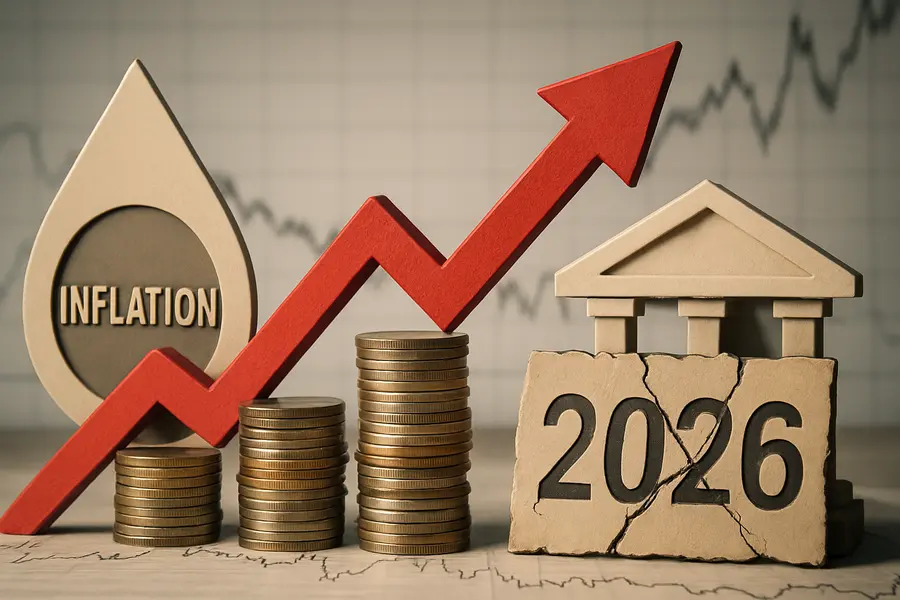
I now have all the data needed. Writing the article.
- Core PCE, the Fed's preferred inflation gauge, rose 3.4% year-over-year in May 2026, up from prior-month levels, while headline CPI May 2026 jumped 4.2%—the fastest annual pace in more than three years.
- The Federal Open Market Committee held its benchmark rate at 3.50%–3.75% at its June 17 meeting, but nine of eighteen members now project at least one rate hike in 2026, a sharp reversal from earlier rate-cut guidance.
- Energy costs surged 23.5% year-over-year, driven by geopolitical disruption, accounting for more than sixty percent of May's monthly CPI increase.
---
Core PCE inflation hit 3.4% year-over-year in May 2026, forcing the Federal Reserve to scrap its rate-cut projections and signal possible hikes ahead as energy and services prices remain stubbornly elevated.
Lead
US core inflation climbed to 3.4% year-over-year in May 2026 on the Personal Consumption Expenditures price index—the Federal Reserve's preferred measure—complicating an already contentious debate inside the FOMC over whether the next policy move should be a cut, a hold, or a hike. Released June 10, the Bureau of Labor Statistics inflation report news showed headline CPI May 2026 at 4.2% annually and 0.5% for the month, against a backdrop of surging energy costs tied to conflict in the Middle East and services inflation that refuses to cool.What Happened
The BLS Consumer Price Index for All Urban Consumers rose 0.5% on a seasonally adjusted basis in May, following a 0.6% gain in April. The 4.2% annual headline reading represents the steepest year-over-year increase since early 2023 and marks an acceleration from April's 3.8% pace.
Core CPI—all items less food and energy—rose 0.2% in May and 2.9% year-over-year, a modest uptick from April's 2.8%. But the more closely watched core PCE figure, which uses a different weighting methodology and is the Fed's formal inflation target benchmark, came in at 3.4% for the month, well above the 2% objective.
Core services inflation, measured as the services index excluding energy services, rose 3.4% annually in May—the worst reading since September 2025. The so-called supercore services gauge, which strips out shelter in addition to energy, spiked 0.55% from April, translating to a 6.8% annualized rate and the sharpest single-month acceleration since March 2024.Shelter costs rose 0.3% monthly and 3.4% annually, remaining a persistent drag. Transportation services climbed 4.1%, apparel gained 4.8%, and medical care services rose 3.6% over the year. Used vehicles and medical care commodities provided partial offsets, declining 2.0% and 1.8% respectively.
Energy's Outsized Role
Energy dominated the monthly print, rising 3.9% in May after gains of 3.8% in April and 10.9% in March—a trend directly tied to supply disruptions stemming from military conflict in the Middle East. The energy index is up 23.5% over twelve months. While energy is excluded from core measures, the sustained price shock is feeding into transportation and logistics costs across the broader economy, providing indirect upward pressure on services prices.The Fed's Response
At its June 17 meeting, the Federal Reserve held the target federal funds rate range at 3.50%–3.75%, a decision that was widely anticipated. The surprises came in the updated Summary of Economic Projections. The FOMC's new dot plot erased the single rate cut that had appeared in March's projections and replaced it with a bias toward additional tightening. Nine of eighteen participants indicated support for at least one rate hike in 2026; six projected two or more increases. Only one member still penciled in a cut this year.
Fed Chair Kevin Warsh, in his post-meeting press conference, emphasized that seventeen of eighteen participants now view the risks to their inflation outlook as skewed to the upside. The median year-end 2026 fed funds rate projection rose to reflect the hawkish tilt. Officials raised their headline PCE forecast for year-end 2026 to 3.6%, up from 2.7% in March, and lifted core PCE projections to 3.3%. Rate reductions, now deferred, are not expected before 2027 in the central scenario.Strategic Context
The May Fed interest rates calculus has shifted materially from the conditions that prevailed at the start of 2026, when markets had priced one to two cuts before year-end. The energy shock acted as the initial trigger, but the persistence of services inflation—particularly in supercore categories that tend to track wage dynamics—signals the problem is not purely supply-side. Shelter, transportation, and medical services remain elevated regardless of commodity price movements, suggesting demand-side pressures have not fully abated.
The FOMC's pivot from easing to potential tightening in a single quarterly cycle is unusual and reflects the degree to which the geopolitical shock has scrambled the policy calculus. Officials also noted a deteriorating growth-inflation tradeoff, with GDP projections revised lower even as inflation forecasts moved higher.
Market Reaction
Treasury yields moved sharply higher in the sessions following the inflation report, with the 2-year note approaching levels not seen since late 2025. Equity benchmarks sold off, led by rate-sensitive sectors including real estate and utilities. The U.S. dollar strengthened as rate-differential expectations shifted against trading partners whose central banks remain on easing paths.