Pomegra
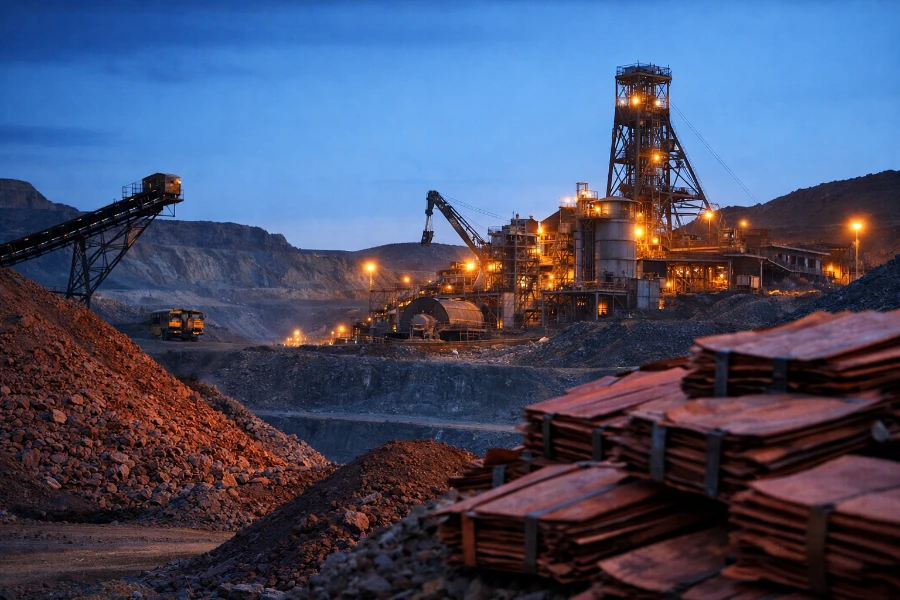
Copper fell 4.8% on the LME to a 13-month low of $11,912 a tonne, and the ASX 200 market index slipped as BHP, Rio Tinto and Capstone Copper led miners down.
- LME copper dropped 4.8% to $11,912 a tonne, the lowest in 13 months and about a fifth below September's record.
- The ASX 200 closed down 0.39% at 8,692.4, with the materials sector off 2.08%.
- Tariff uncertainty, weak Chinese demand and doubts over AI spending are driving the selloff.
Lead
Copper on the London Metal Exchange fell 4.8% overnight to $11,912 a tonne, its lowest level in 13 months. The drop hit mining shares across Asia-Pacific on Wednesday, 25 November. The S&P/ASX 200 market index closed down 34.0 points, or 0.39%, at 8,692.4. Materials were the weakest sector, falling 2.08%, and 133 index members declined against 72 that advanced.
The move extends a slide that began after copper set an all-time high above $14,500 a tonne in September. It follows a 5.5% one-day fall on 18 November, the largest daily drop since April 2025, which took the metal to its lowest since early April.
What Happened to Copper Prices?
Three-month LME copper fell 4.8% in one session to $11,912, erasing the rebound that followed Nvidia (NVDA) results earlier in the week. The metal now sits close to bear-market territory, defined as a 20% decline from a peak.
The contract has lost momentum since the autumn rally, when US tariff expectations and stockpiling pulled metal into American warehouses. That tariff premium has faded. Net bullish positioning across LME and COMEX contracts fell from about 21% of open interest at the end of September to roughly 9% in early November. Funds have cut exposure faster than physical demand has changed.
Why Did Miners Fall Across Asia-Pacific?
Miners fell because lower copper prices reduce expected revenue and cash flow for producers, and the selloff spread to other commodities. On the Australian Securities Exchange, the large diversified miners dropped on the session:
- BHP Group (BHP) fell 1.90% to A$52.22.
- Rio Tinto (RIO) fell 2.04% to A$135.03.
- Fortescue (FMG) fell 2.56% to A$13.33.
- Capstone Copper (CSC), the most direct copper exposure on the board, fell 5.94% to A$8.55.
Lithium producers fell harder as the weakness spread across battery and industrial metals. Pilbara Minerals (PLS) lost 5.88%, Mineral Resources (MIN) 6.24% and IGO (IGO) 5.25%.
How Did Asia-Pacific Equity Markets React?
The ASX 200 held up better than most regional peers because the AI-linked selloff on Wall Street hit technology-heavy markets harder. Japan's Nikkei 225 fell 2.8% to 57,011.62. South Korea's Kospi lost more than 6% to 4,697.51 as Samsung Electronics dropped 9.9% and SK Hynix 11.1%. SoftBank Group fell 14.8%. Hong Kong's Hang Seng slipped 0.3% to 22,151.28 after earlier gains.
Copper links the two stories. The metal had traded as a proxy for AI infrastructure, since data centres and power grids need large volumes of it. When doubts about AI spending returned, copper fell with chip stocks.
What Is Driving the Copper Selloff?
Four forces are pressing on the metal at once:
- US tariff policy. Uncertainty over duties on refined copper has unwound the stockpiling trade that lifted prices to records.
- Chinese demand. Weak domestic consumption in the world's largest copper buyer has undercut the supply-shortage case.
- Interest rates. Expectations of further Federal Reserve rate hikes have strengthened the dollar, which makes dollar-priced metals costlier for other buyers.
- AI capital spending. Downward revisions to AI-related investment plans have cut a growth narrative that supported prices all year.
Australian Inflation Adds Pressure
The domestic backdrop was also unfavourable. Australian consumer prices rose 4.9% in the year to October, up from 4.3% in September. The trimmed mean measure, which strips out volatile items, reached 3.8% against a forecast of 3.6%. The data keeps a further Reserve Bank of Australia rate increase under consideration ahead of its 8 December meeting, a risk for equity valuations beyond the resources sector.
What Comes Next for Copper and Miners?
The near-term direction depends on whether the unwinding of speculative positions has run its course. Net long positioning is already well below its September level, which reduces the pool of sellers. Tariff decisions in Washington, Chinese stimulus and the next leg of AI spending guidance are the main catalysts over the coming three to six months.
For producers, the gap between spot prices and the levels assumed in earlier guidance will shape capital allocation. Diversified miners such as BHP and Rio Tinto draw much of their earnings from iron ore, which cushions them. Pure-play copper names such as Capstone carry the full exposure.
Outlook
Copper's fall to a 13-month low, driven by tariff doubts, soft Chinese demand, rate expectations and fading AI enthusiasm, pulled the ASX 200 down 0.39% and materials down 2.08%. The market now looks for signs that positioning has stabilised and that demand from China and data-centre construction holds firm.
Mentioned tickers: BHP, RIO, FMG, CSC, PLS, MIN, IGO, NVDA