Pomegra
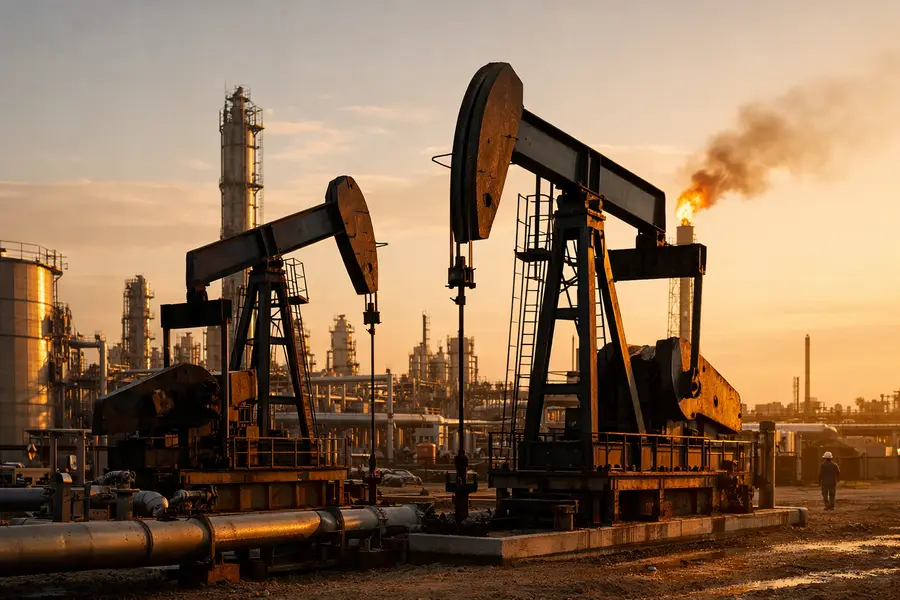
Chevron (CVX) and Exxon Mobil (XOM) hit 52-week highs as U.S. and Israeli threats against Iran lifted Brent to about $111, its highest since early May.
- Chevron reached $225.67 and Exxon Mobil $179.30 on Monday, both fresh 52-week highs.
- Brent touched an intraday high of $110.97, the strongest level since early May.
- Trump and Netanyahu signaled renewed action on Iran, and Tehran promised a harsher response.
Lead
Chevron and Exxon Mobil shares rose to 52-week highs on Monday, October 19, as President Donald Trump and Israeli Prime Minister Benjamin Netanyahu escalated their threats against Iran and pushed the crude oil price sharply higher. Brent futures reached an intraday peak of $110.97 a barrel, the highest since early May. Chevron touched $225.67 and Exxon $179.30. Energy was among the strongest sectors of the week, with the sector fund XLE up about 4.9%.What Happened to Oil and Energy Stocks?
Oil and energy equities rallied together as traders priced in the risk of renewed strikes on Iran and further disruption to Gulf supply. Brent held near $110 on Tuesday after settling close to $109.55 on Monday. U.S. West Texas Intermediate settled near $103.66. Oil has traded in a range of roughly $97 to $110 this month, swinging on each signal about whether the conflict with Iran will widen or ease.
The move in equities was broader than the commodity. The S&P 500 rose 0.41% to close at 7,690 on Monday. Integrated producers such as Chevron and Exxon gained more than the index because higher realized prices flow directly into upstream cash flow, while their refining and chemicals units add some insulation.
What Did Trump and Netanyahu Say About Iran?
Trump said on Sunday that the United States could "soon finish the job" against Iran unless Tehran changes course, and he gave Netanyahu his "complete and total endorsement" ahead of Israel's October 27 election. Trump called Netanyahu a "Great Warrior Prime Minister" and said that under any other Israeli leader, Washington would have to carry out the work against Iran itself, something he is "not inclined" to do.
Netanyahu replied that the two countries "have a job to finish" and would finish it together. On Monday, during a visit to an air base, he told Israel's enemies: "Do not test us." The remarks tie the military outlook to a domestic political event, which adds uncertainty to the next eight days.
How Has Iran Responded?
Iran has promised retaliation and kept the Strait of Hormuz at the center of its position. Armed Forces Chief of Staff Ali Abdollahi said another attack would draw a response "different from, and more severe than before." Foreign Minister Abbas Araghchi said that the last time Washington wanted to "finish the job," Iran emerged stronger, and added: "Want to try your luck again? Be our guest."
Tehran says its proposal to reopen the strait and restart talks with Washington is still available. A senior adviser to the supreme leader has said Hormuz should stay closed until Trump and Netanyahu are removed from power. Iran also stepped up attacks on tankers in the Gulf last week, a development that added to the 10% weekly gain in WTI.
Why Does Hormuz Matter for the Crude Oil Price?
The Strait of Hormuz is the narrow passage linking Gulf producers to global markets, and roughly a fifth of world oil consumption normally moves through it. Any sustained interruption removes barrels from the market quickly and has few short-term substitutes. Pipeline bypasses and spare capacity in Saudi Arabia and the United Arab Emirates cover only part of the volume, and tanker insurance costs rise with each attack.
That arithmetic explains why a statement of intent, without a single new strike, can move Brent by several dollars. It also explains why the largest Western producers, whose output sits outside the Gulf, benefit when the risk premium widens.
What Comes Next for Oil Prices?
Three scenarios frame the next several weeks.
- Escalation: New U.S. or Israeli strikes would test Iran's pledge of a stronger response, put tanker traffic at further risk, and push Brent back toward the highs of earlier this year.
- Standoff: Rhetoric stays elevated without action, and Brent continues to trade in its recent $97 to $110 band, with energy shares holding gains.
- De-escalation: A return to talks on reopening Hormuz would remove much of the premium and pressure the recent equity rally.
The October 27 Israeli election is the nearest hard date. Third-quarter earnings from the major integrated oil companies, due in the coming weeks, will show how much of the higher price environment has reached profits and capital returns.