Pomegra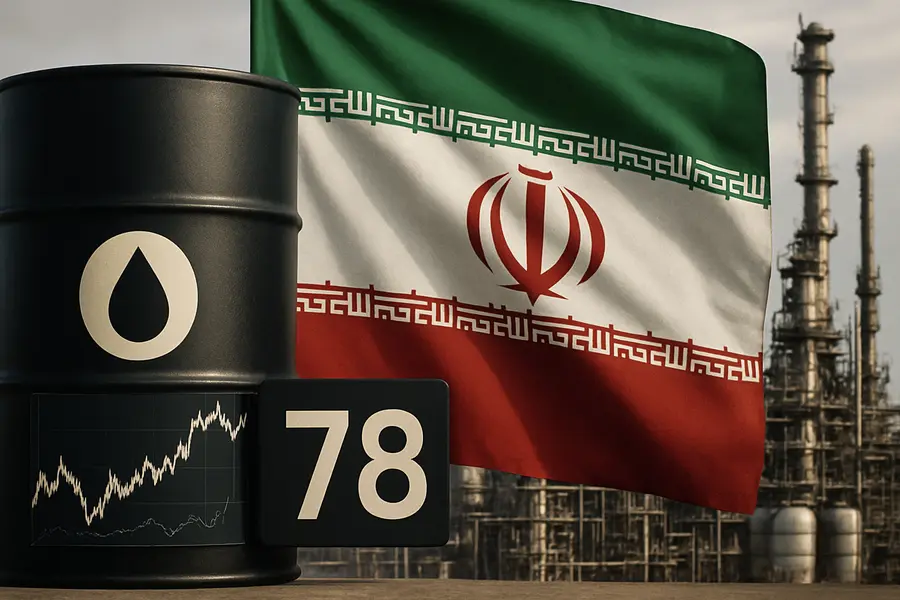
Brent crude settled near $78 per barrel and WTI near $74 on June 23 as the US-Iran memorandum of understanding moves into its active phase, reopening the Strait of Hormuz to commercial traffic.
- Brent crude traded at $78.15 and WTI at $74.19 on June 23, down sharply from a May peak above $100 per barrel.
- Iran briefly declared Hormuz closed on June 21 citing Israeli strikes in Lebanon; U.S. forces disputed the claim and tanker flows are resuming.
- Iran's nuclear enrichment levels and highly enriched uranium stockpiles remain unresolved, deferred to 60-day technical talks in Switzerland.
Lead
Oil markets recorded a second consecutive session of moderate declines on June 23, with Brent crude futures settling at $78.15 per barrel and WTI at $74.19, as the United States–Iran memorandum of understanding—signed on June 17 in simultaneous ceremonies at Versailles and Tehran—transitions from diplomatic announcement into contested operational reality. The 14-point framework, brokered by Pakistan and Qatar, grants Iran a 60-day license to export oil free of U.S. sanctions while tasking both parties with resolving core nuclear disputes before mid-August.What Happened
President Donald Trump signed the accord during a working dinner with French President Emmanuel Macron at the Palace of Versailles on the sidelines of the G7 summit; Iranian President Masoud Pezeshkian countersigned remotely in Tehran. The agreement commits Washington to an immediate cessation of military operations on all fronts, including Lebanon, and delivers transitional sanctions relief tied to verifiable compliance.
Under Article 5, Iran pledged to allow free commercial passage through the Strait of Hormuz for the full 60-day window—a provision governing roughly 20 percent of global seaborne oil trade before the conflict disrupted the corridor. Washington has announced a framework for at least $300 billion in reconstruction and economic development assistance, alongside the potential release of up to $25 billion in previously frozen Iranian assets subject to compliance benchmarks.
Hormuz Traffic Normalizing, With Friction
Tanker flow through the strait surged in the days immediately following the June 17 signing, with Iranian export cargo exceeding 30 million barrels during the first week of implementation. The recovery proved uneven.
On June 21, Iran declared the strait closed, pointing to continued Israeli airstrikes in southern Lebanon as a violation of the MoU's ceasefire-on-all-fronts clause. U.S. Central Command disputed the declaration, citing data showing 55 merchant ships transited the waterway on Saturday. By Sunday, vessel tracking data recorded 12 transits, down from more than 21 the previous day—still far below the more than 100 ships, including dozens of tankers, that moved daily through Hormuz before the conflict began.
The episode illustrated the degree to which Hormuz throughput remains hostage to the Lebanese sub-conflict the MoU did not fully resolve. Iranian officials have indicated that full commercial restoration is contingent on what they describe as complete implementation of Article 1, requiring an end to all military operations across every active front.
Market Reaction
Oil prices have declined sharply from their May 2026 peak above $100 per barrel. The announcement of the 60-day roadmap has been the primary driver of the drawdown, with Brent briefly touching a three-month low of $77.20 earlier in the week. WTI staged a 3% intraday rally on renewed Hormuz rhetoric before settling roughly 1% higher, then retreating. As of June 23, the Brent–WTI spread held near $4, reflecting residual logistical uncertainty around Gulf loading programs.Gulf crude oil producers are preparing to raise output. Kuwait lifted force majeure notices; ADNOC in Abu Dhabi resumed normal supply operations. A full normalization of Hormuz could theoretically inject approximately 80 million barrels into international markets, adding further downward pressure on prices at a time when demand signals from Asia and Europe remain subdued.
Strategic Context
The MoU is structurally lighter than the 2015 Joint Comprehensive Plan of Action. It establishes a broad framework but defers Iran's nuclear program—specifically uranium enrichment levels and the status of its highly enriched uranium stockpiles—to the 60-day negotiation window now underway in Switzerland. Both delegations have convened for technical-level talks, though a session at the Bürgenstock conference center was briefly postponed following logistical complications.
Saudi Arabia, Turkey, and Egypt are participating alongside Qatar and Pakistan as facilitating parties, a multilateral structure designed to reduce the bilateral friction that has historically undermined U.S.–Iran diplomacy. The framework's breadth is seen as both a strength—ensuring regional buy-in—and a vulnerability, as any facilitating party can publicly signal alarm if talks stall.
What Comes Next
The 60-day clock expires in mid-August. That date is a hard deadline for resolving the nuclear file, maritime governance protocols, and the permanent architecture of sanctions relief. Should talks fail to produce a final agreement, the MoU does not automatically renew, and U.S. sanctions revert to pre-waiver status.
OPEC+ holds a scheduled monitoring meeting before the deadline. Member states have signaled output adjustments will remain contingent on whether the Hormuz corridor returns to full operational status, tying geopolitical resolution and oil market trajectory directly together through the summer.