Pomegra
Brent crude holds near $110 as Washington sends a third aircraft carrier to the Middle East, Hormuz traffic falls about 70% and Iran talks remain unscheduled.
- Brent traded near $110 on Oct. 20, a five-month high, up from $102.31 when the third carrier was first reported.
- The USS Theodore Roosevelt is due by end-November, adding about 10,000 sailors and Marines.
- Hormuz transits are down roughly 70% to 254 vessels a week.
Lead
Washington is sending a third aircraft carrier to the Middle East, which has added to the geopolitical risk premium in oil and kept Brent crude at or near $110 a barrel. Brent touched $110 on Oct. 16 for the first time since May and settled at $109.86. It closed at $109.55 on Oct. 19, then traded around $110 on Oct. 20. The crude oil price MarketWatch and other terminals track as the global benchmark is up more than 7% since the carrier report first surfaced on Oct. 1.
What Happened?
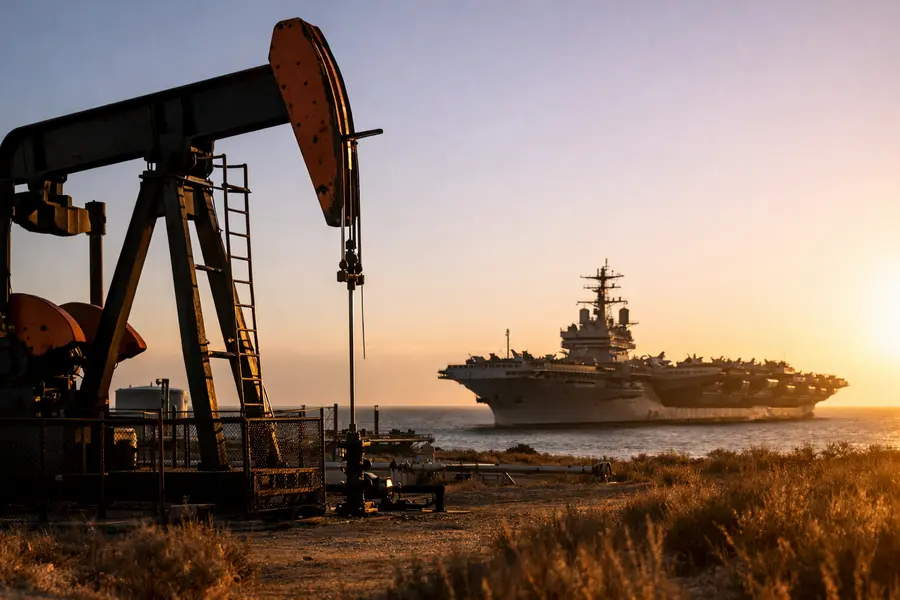
The United States ordered the USS Theodore Roosevelt toward the Persian Gulf region, where it will join two carriers already on station. The ship is due by the end of November, along with additional Marine forces. Together they add roughly 10,000 personnel to the regional buildup.
Oil reacted immediately. On the day of the first report, Brent jumped 4.4% to settle at $102.31 a barrel, and U.S. West Texas Intermediate rose 2.7% to $92.87. Prices have since climbed another $8 as shipping attacks and supply disruptions compounded the military signal.
Why Is Brent Staying Above $110?
Brent is holding at these levels because the market is pricing a physical disruption, not only a military posture. The war that the United States and Israel began against Iran in February has left the Strait of Hormuz, the passage for a large share of Gulf crude, largely closed to normal traffic.
Transits have fallen about 70% to roughly 254 vessels a week, and at least 12 ships were attacked in recent days. War-risk insurance premiums for Hormuz passages have risen sharply, and operators with alternatives are using them.
Other supply shocks have added to the pressure:
- Houthi strikes on Saudi energy facilities and commercial vessels.
- Iraq's force majeure declaration on its oilfields.
- Drone strikes on Kuwaiti refineries.
- China's curbs on fuel exports.
Estimates put the geopolitical premium embedded in prices at just over $20 a barrel. That premium reflects threats to export routes and infrastructure more than confirmed barrel losses, so it can compress or widen quickly with each headline.
Geopolitical Dimension
The carrier deployment reflects a policy of coercion alongside diplomacy. Iran has said it is reviewing American comments on a compromise, and its foreign minister said on Oct. 18 that the strait would reopen on the sixth day if Tehran's conditions are met. Those conditions include lifting the U.S. naval blockade, releasing frozen assets and waiving oil sanctions. Washington is demanding a significant cut to Iran's uranium enrichment program.
No formal negotiating round is scheduled. Moscow's diplomatic outreach to Tehran, including a visit by Russia's foreign minister, is a step toward talks but not a settlement. U.S. officials have signaled that a resumption of strikes on Iran is expected after the Nov. 3 midterm elections, which gives the carrier's arrival date a political and operational context.
A third carrier gives the Pentagon more options to escort shipping, defend Gulf infrastructure or resume strikes. It also raises the cost of any miscalculation in a confined waterway where mines and drones have already disrupted traffic.
Economic Channels
Energy is the main route through which the conflict reaches the broader economy. Brent near $110 raises fuel and freight costs worldwide and feeds directly into inflation readings, complicating the path for central banks that were weighing rate cuts. Importers across Asia and Europe face the sharpest exposure, since they depend most heavily on Gulf crude.
Offsets exist but are limited. The International Energy Agency released 400 million barrels from emergency reserves, and U.S. Persian Gulf oil shipments have recovered to about 80% of pre-war levels. Those measures cushion the loss of supply but do not remove the premium while the strait remains contested.
What Comes Next for Oil Prices?
Oil prices over the next three to twelve months depend on whether Hormuz traffic normalizes, and three scenarios frame the range.
- Negotiated reopening: If the compromise track yields a reopening, the risk premium of $20 or more would compress quickly, and Brent would retrace toward the low $90s seen before the carrier report.
- Stalemate: A prolonged standoff with periodic ship attacks would keep Brent in a $105 to $115 band, with spikes tied to each incident.
- Resumed strikes: Renewed U.S. strikes after the midterms, or a successful attack on Gulf export infrastructure, would push prices above the May peak.
The market has already moved on a report of the carrier. Its actual arrival in late November, and any decision on the use of force that follows, are the next scheduled catalysts.
Outlook
Brent's hold above $110 reflects a risk premium built on a largely closed Strait of Hormuz, repeated attacks on shipping and a growing U.S. naval presence. Diplomacy is active but unscheduled, and the Nov. 3 midterms and the carrier's arrival frame the next phase. Until Hormuz traffic recovers, crude will keep trading on geopolitics before fundamentals.