Pomegra
BHP copper generated 54% of group underlying EBITDA in FY2026, eclipsing iron ore in a historic first as energy-transition demand reshapes the world's largest miner.
- Copper EBITDA hit $18.2 billion in FY2026, accounting for 54% of BHP's group total - a first in the company's history.
- Group underlying EBITDA rose 27% to approximately $33 billion, driven by record copper output and a 35% jump in realized copper prices.
- AI data center construction and electrification are cementing copper's structural advantage over iron ore on BHP's balance sheet.
Lead
BHP Group (BHP) reported full-year results for the fiscal year ended June 30, 2026, disclosing a structural pivot that has reshaped the miner's earnings base: copper has overtaken iron ore as the primary driver of group profitability for the first time in company history. The copper division generated $18.2 billion in underlying EBITDA, representing 54% of the group total, while iron ore contributed more than $14 billion, or 46%. Group underlying EBITDA reached approximately $33 billion, a 27% increase from the prior fiscal year, extending a run of margin expansion that has recast one of the world's largest mining franchises as a transition-metals platform.What Drove Copper Past Iron Ore?
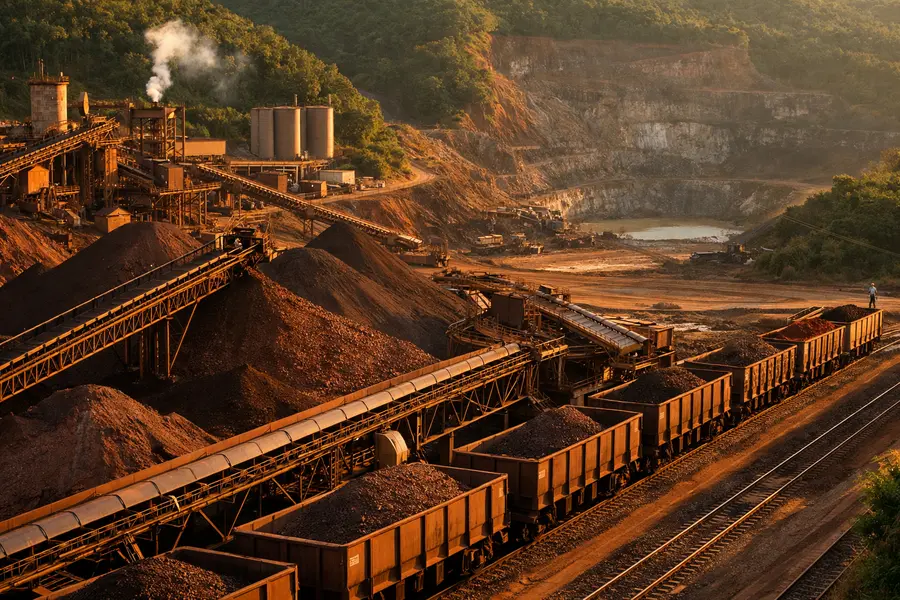
A 35% rise in realized copper prices over the fiscal year was the primary catalyst, amplified by record output of approximately 2 million tonnes for the second consecutive year. BHP's Escondida mine - the world's largest copper operation - posted underlying EBITDA of $12.4 billion, a 45% increase from $8.6 billion in FY2025. The copper division's overall EBITDA margin reached 70%, compared with iron ore's 61%, reflecting the combination of price strength and operational leverage. Western Australia Iron Ore (WAIO) also achieved record production and retained its ranking as the world's lowest-cost major iron ore producer for the seventh consecutive year, yet copper's higher price trajectory and superior margin proved decisive in shifting the group's earnings mix.
Why Does This Milestone Matter for Global Markets?
Copper's ascent at BHP marks the first structural reordering of the company's profit mix since iron ore displaced petroleum as the dominant division more than a decade ago. The shift reflects a fundamental reorientation of commodity demand globally. Where Chinese urbanization powered iron ore consumption through two decades of infrastructure expansion, electrification - spanning energy grids, renewable power infrastructure, and electric vehicles - now represents the dominant growth vector for copper. AI data center construction has added a new and accelerating dimension: the power delivery systems required for large-scale AI computing infrastructure are copper-intensive at every stage, from substation cabling to chip-level interconnects. Market participants describe the crossover as the structural close of BHP's "Iron Age" and the beginning of a commodity cycle defined by the energy transition and digital infrastructure build-out.
Capital Returns and Balance Sheet
BHP declared a final dividend of 99 US cents per share, supported by the stronger earnings base. Net debt fell to $8.7 billion, providing capital allocation headroom. Group EBITDA margin expanded 6 percentage points to 59%, and return on capital employed reached 26%. Chief Executive Brandon Craig, who assumed leadership on July 1, 2026, described copper as "the engine driving BHP's growth," noting that the copper division's free cash flow is now sufficient to self-fund its own expansion - eliminating the need to divert capital from shareholder returns to finance organic growth. BHP also approved $500 million in pre-commitment funding for a new concentrator at Escondida, reinforcing the growth trajectory of its flagship copper asset.
Outlook
BHP enters FY2027 with copper trading near multi-year highs and demand projections for electrification and AI infrastructure structurally elevated. Iron ore faces softer near-term pricing as Chinese steel demand moderates, widening the earnings divergence between the two divisions. Escondida expansion and Olympic Dam's long-life asset base are expected to sustain copper supply growth, while BHP's self-funding capital model reduces the risk of balance-sheet strain at current commodity prices. The group's EBITDA margin at 59% and ROCE at 26% place it among the highest-returning diversified miners, positioning BHP as a primary vehicle for institutional investors seeking direct equity exposure to the energy transition through the commodities complex.