Pomegra
Global equity markets are holding near record highs in mid-2026 as AI infrastructure spending eclipses geopolitical shocks that have rattled commodity markets and tested investor nerves since the start of the year.
- Big-5 hyperscalers are on track to spend a combined $725 billion on AI capital expenditure in 2026, up 77% from 2025's prior record.
- The Nasdaq-100 surged more than 33% from its March low to record territory in early June, driven by AI chip and cloud earnings beats.
- The Iran conflict pushed Brent crude to $120 a barrel and shaved an estimated 0.6% from first-half global GDP growth at an annualized rate, yet equity markets absorbed the blow.
Lead
Global equity markets have sustained one of the most concentrated, AI-driven rallies on record through the first half of 2026, even as a U.S.-Israel military operation against Iran in late February sent oil prices to $120 a barrel, disrupted Strait of Hormuz shipping lanes, and unleashed the most acute geopolitical risk shock in a generation. As of late June 2026, the dominant verdict across institutional capital — from Wall Street strategists to sovereign allocators — is that AI stock momentum has proved more durable than headline risks, with technology and AI infrastructure commanding the price-setting role that energy once held.
What Happened
The year opened with two competing macro narratives. On the geopolitical side, a joint U.S.-Israel strike on Iran on February 28 quickly escalated into a prolonged confrontation, blocking the Strait of Hormuz for the first time since the 1970s and triggering a 15% single-session surge in Brent crude before prices settled at $120 a barrel. Equity markets outside the United States cracked sharply: Japan's Nikkei fell more than 2%, South Korea's KOSPI suffered its steepest daily decline since 2008, triggering circuit breakers, and energy-import dependent emerging markets repriced across the board.
Yet the shock proved self-limiting for U.S. technology equities. The Nasdaq-100 staged a recovery from its March low that carried the index past 30,660 in early June — a gain exceeding 33% in roughly ten weeks — before consolidating in the mid-30,500s after Federal Reserve Chair Kevin Warsh struck a hawkish tone at the June 17 policy meeting. The S&P 500 has also absorbed the geopolitical turbulence, with year-end targets from JPMorgan (JPM), Barclays (BCS), and Stifel all converging at 7,800, implying roughly 6% additional upside from current levels. Goldman Sachs estimates AI-related spending will drive approximately 40% of S&P 500 earnings growth in 2026.
Market Reaction
The divergence between commodity-linked markets and technology equities crystallized the central market sentiment 2026 dynamic: investors are treating AI infrastructure buildout as a structural, multi-year demand floor that insulates the sector from geopolitical supply shocks. Micron Technology (MU) crossed $1 trillion in market capitalization in early June, doubling from $500 billion in fewer than 50 trading days. Memory and storage names leveraged to AI data centers — including SanDisk and Western Digital (WDC) — posted multi-hundred-percent gains over the prior twelve months.
Alphabet (GOOGL) surpassed $4.6 trillion in market capitalization following a 10% single-session gain on Q1 2026 earnings, narrowing the gap with Nvidia (NVDA) to roughly $200 billion. Microsoft (MSFT) reported AI annualized revenue running past $37 billion, with underlying Azure cloud growth holding firm. Concentration remains acute: as of late May, the top ten S&P 500 constituents accounted for 35.6% of the index's total value, and the Magnificent Seven alone represent approximately 34% of the benchmark's market capitalization.AI and Technology Angle
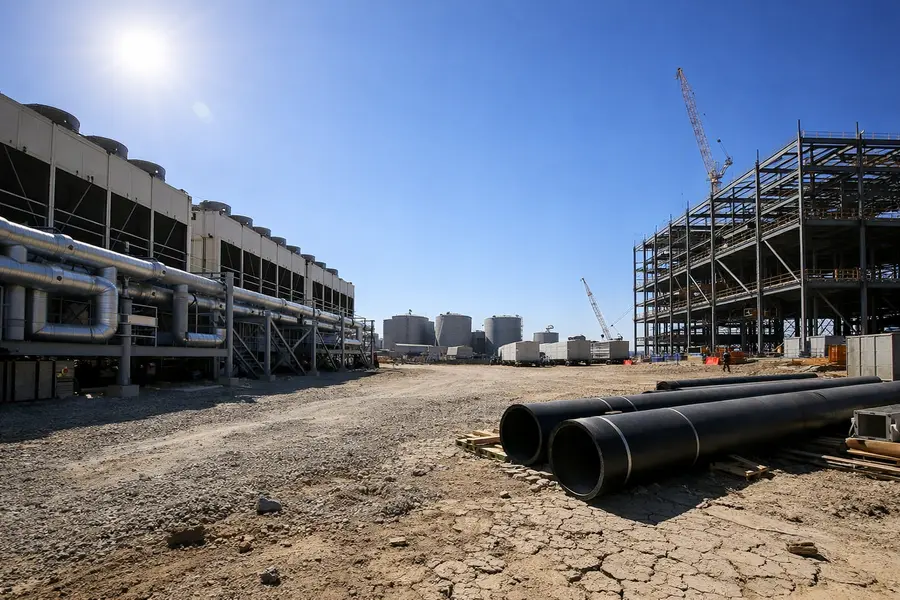
The tech growth engine in 2026 is capital expenditure at a scale without peacetime precedent. Amazon (AMZN), Alphabet, Meta (META), Microsoft, and Oracle (ORCL) — the five largest cloud and AI infrastructure hyperscalers — are on a collective spending trajectory of approximately $725 billion for the full year, a 77% increase over 2025's prior record of roughly $410 billion. Alphabet alone raised its full-year 2026 capital expenditure guidance to a range of $180–190 billion. Amazon projected approximately $200 billion in 2026 capex. Meta set its range at $125–145 billion.
First-quarter earnings validated the investment thesis. Alphabet reported Q1 revenue of $109.9 billion, a 22% year-over-year gain that beat consensus by nearly $3 billion. Google Cloud revenue grew 63% year over year to approximately $20 billion. Amazon Web Services posted $37.59 billion in quarterly revenue, a 28% annual increase — its fastest pace in fifteen quarters. These figures confirm that enterprise AI adoption has moved well past pilot stages into recurring, scaled commercial deployments, supplying the revenue trajectory that justifies elevated capital expenditure.
Geopolitical Dimension
The geopolitical risk news backdrop has not disappeared. The Iran conflict's cascading economic fallout — disrupted energy shipments, elevated fertilizer costs, strained industrial supply chains, and realigned financial conditions across emerging markets — is expected to persist well beyond a ceasefire. J.P. Morgan Global Research estimates the sustained elevation in Brent crude prices depressed first-half 2026 global GDP growth by 0.6% at an annualized rate. Oxford Economics and the IMF have warned the structural reshaping of global commodity markets could take years to fully absorb.
Simultaneous trade tensions, including residual U.S.-China friction over semiconductor export controls, add a second layer of disruption. Controls on advanced chip architectures have pushed Chinese domestic AI hardware procurement toward alternative suppliers and accelerated domestic development timelines, fragmenting the global AI supply chain in ways that could alter competitive dynamics for U.S. semiconductor firms over the medium term.
Strategic Context
The market's resilience against this backdrop reflects a structural shift in what drives global equity risk premia. Energy supply disruptions, which historically transmitted directly into corporate margin compression and consumer spending contraction, now compete with a countervailing force: the capital intensity of AI stock momentum is itself a demand stimulus. Every dollar of hyperscaler capex flows to semiconductor fabs, networking equipment makers, data center construction, and power infrastructure — creating a self-reinforcing investment cycle that partially offsets macro headwinds.
Market sentiment 2026 data underscores the bifurcation. Goldman Sachs's U.S. Sentiment Indicator has recovered to a positive 0.8 reading, AAII surveys show persistent individual-investor caution that historically functions as a contrarian bullish signal, and nearly 60% of S&P 500 stocks carry Buy-equivalent analyst ratings — the highest share on record. The primary risk flagged consistently across institutional research is valuation concentration: with the ten largest names controlling more than a third of the index, any earnings disappointment among AI leaders could trigger disorderly de-risking disproportionate to the fundamental miss.What Comes Next
Three variables will define the second half of 2026. First, whether AI monetization — enterprise software contracts, cloud consumption, autonomous agent deployments — accelerates fast enough to justify the $725 billion capex program. Second, whether the Iran ceasefire process, which remains incomplete as of late June, holds or reignites a fresh energy shock capable of sustaining Brent above $100. Third, whether the Federal Reserve's hawkish posture under Chair Warsh tightens financial conditions enough to re-price extended technology valuations, as the June 17 policy signal briefly threatened.
Outlook
AI infrastructure investment has emerged as the dominant force in global financial markets in 2026, absorbing geopolitical shocks that would have generated extended equity corrections in prior cycles. The $725 billion hyperscaler capex program, confirmed by Q1 earnings beats across cloud and AI hardware, has provided a durable demand anchor for technology equities even as oil markets and emerging market indices bear the weight of the Iran conflict. The central risk is not geopolitical escalation per se, but the potential for a valuation correction in a market structurally dependent on uninterrupted AI earnings delivery. With year-end S&P 500 targets clustering near 7,800 and AI spending commitments locked in through multi-year infrastructure contracts, the balance of institutional conviction remains tilted toward continued tech growth leadership — contingent on earnings execution.