Pomegra
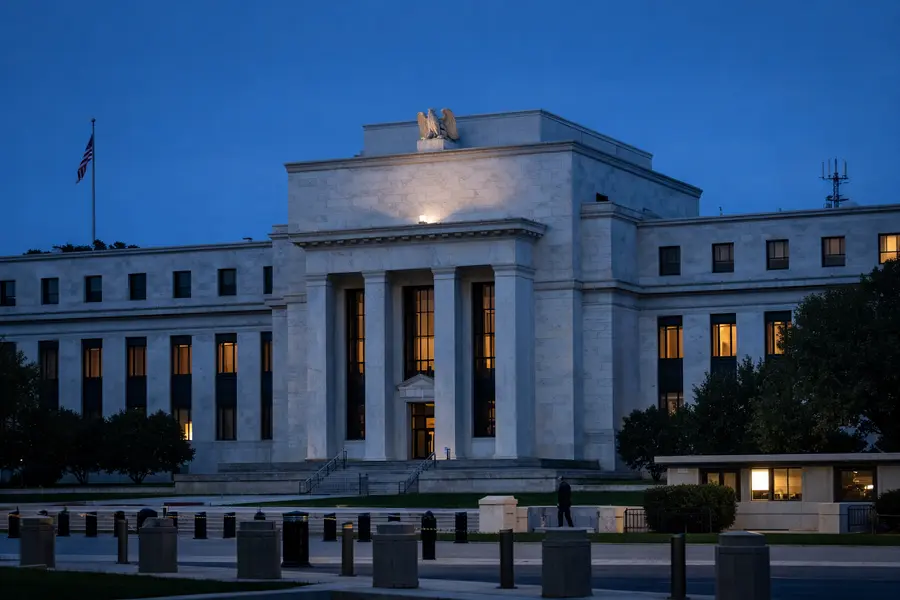
The 10-year Treasury yield pulled back from its 5.041% peak after the Federal Reserve's unexpected hold decision eased tightening pressure on long-dated debt, offering relief to homebuilders and rate-sensitive growth stocks.
- The 10-year Treasury yield reached 5.041%, the highest level in 17 years, before retreating following the Fed's pause decision.
- Rate-sensitive homebuilder stocks and high-duration growth equities staged a partial recovery as long-end yields declined.
- The Fed's hold removes near-term tightening pressure but leaves the structural case for elevated interest rates intact.
Lead
The benchmark 10-year Treasury yield pulled back from 5.041%, its highest level since 2007, after Federal Reserve policymakers voted to hold the federal funds rate steady, a decision that caught a majority of market participants off guard. The surprise pause lifted Treasury prices modestly across the curve, compressing yields that had spent several weeks climbing on resilient employment data and persistent inflation readings. The move sent immediate relief signals through sectors that had been most punished by the spike, including residential construction, high-growth technology, and consumer discretionary.
What Drove the Yield to a 17-Year High?
The 10-year yield's climb to 5.041% reflected a confluence of pressures that had been building since early summer. Robust non-farm payrolls reports, sticky core inflation, and successive upward revisions to gross domestic product all reinforced the view that the Fed would extend its tightening cycle. Simultaneously, elevated Treasury supply -- driven by wider federal deficits and a structural shift in overseas demand -- pushed the term premium, the extra yield investors require to hold longer-duration bonds, to its highest level in over a decade. The combination of a resilient macro backdrop and increased supply absorption requirements forced buyers to demand significantly higher interest rates before committing capital to long-dated government debt.
Why Did the Fed's Hold Shift Market Dynamics?
The Fed's decision to keep the federal funds rate unchanged removed the most immediate catalyst for further yield expansion at the long end. When the central bank signals it is not adding incremental tightening, the bond market's pricing of future rate hikes compresses, which tends to pull forward yields lower even if the terminal rate expectation barely changes. The reaction was measured rather than euphoric: the 10-year yield retreated by roughly 15 to 20 basis points in the sessions following the announcement, a meaningful but partial reversal of a move that had accumulated over several months. Traders interpreted the hold not as a pivot to easing, but as a ceiling -- at least temporarily -- on how aggressively the Fed would push the cost of borrowing.
How Does This Affect Homebuilders and Rate-Sensitive Equities?
Homebuilder stocks had absorbed disproportionate punishment during the yield spike, given that 30-year fixed mortgage rates track closely to the 10-year Treasury and had breached 8% at the peak -- levels that historically stall transaction volume and compress builder margins. D.R. Horton (DHI), Lennar (LEN), and PulteGroup (PHM) each posted sharp intraday gains when yields pulled back, recovering a fraction of the ground lost during the preceding weeks. The relief reflects a mechanical link: lower long-end rates ease mortgage affordability, stabilize new-home demand expectations, and reduce the carrying cost of land inventories. High-duration growth equities within the NASDAQ (QQQ) similarly bounced, as their valuations are disproportionately sensitive to the discount rate applied to future cash flows. Nvidia (NVDA), Microsoft (MSFT), and Amazon (AMZN) all participated in the rally, consistent with historical patterns where a softening 10-year yield supports price-to-earnings multiple expansion for long-duration assets.
What Does Prime Rate History Suggest About the Path Forward?
Reviewing prime rate history across prior tightening cycles reveals that yield retreats following central bank pauses are rarely linear or permanent. In the 1994 and 2004 tightening episodes, the 10-year Treasury yield continued oscillating around key resistance levels for months after the final hike, driven by fiscal developments, foreign demand shifts, and evolving growth expectations. The structural backdrop today -- elevated sovereign debt supply, a rebuilding of term premium, and above-target inflation -- argues against a swift return to the sub-4% yield environment that characterized the decade following the global financial crisis. The partial reprieve for borrowers and rate-sensitive assets is real, but the reset in the longer-term interest rates regime remains the dominant frame.
How Does This Interact With the Broader Equity Market?
The S&P 500, tracked broadly through the SPY SPDR S&P 500 ETF Trust (SPY), posted gains following the yield pullback, led by the sectors most exposed to financing costs. Financial conditions loosened modestly, as measured by credit spreads and equity volatility gauges. Semiconductor names including those held through SOXL also rallied, as the sector carries substantial growth-valuation sensitivity. The episode underscores the degree to which equity markets today function partly as leveraged expressions of rate expectations: when long-term borrowing costs compresses even modestly, multiple-expansion dynamics can produce outsized moves in high-beta and high-duration names within a single session.
Outlook
The 10-year Treasury yield's retreat from 5.041% delivers a tactical reprieve for homebuilders, rate-sensitive growth equities, and any borrower or issuer tied to long-end benchmarks. The fundamental drivers that pushed yields to a 17-year high -- structural fiscal deficits, term premium re-pricing, and a labor market that has repeatedly surprised to the upside -- remain in place. The Fed's hold buys time but does not resolve the tension between elevated government borrowing needs and a market demanding higher compensation for duration risk. Investors and corporate strategists will watch upcoming inflation data, Treasury auction demand, and Fed communication for evidence of whether the yield ceiling is durable or merely a pause in a longer repricing cycle.
Mentioned tickers: DHI, LEN, PHM, QQQ, NVDA, MSFT, AMZN, SPY, SOXL