Pomegra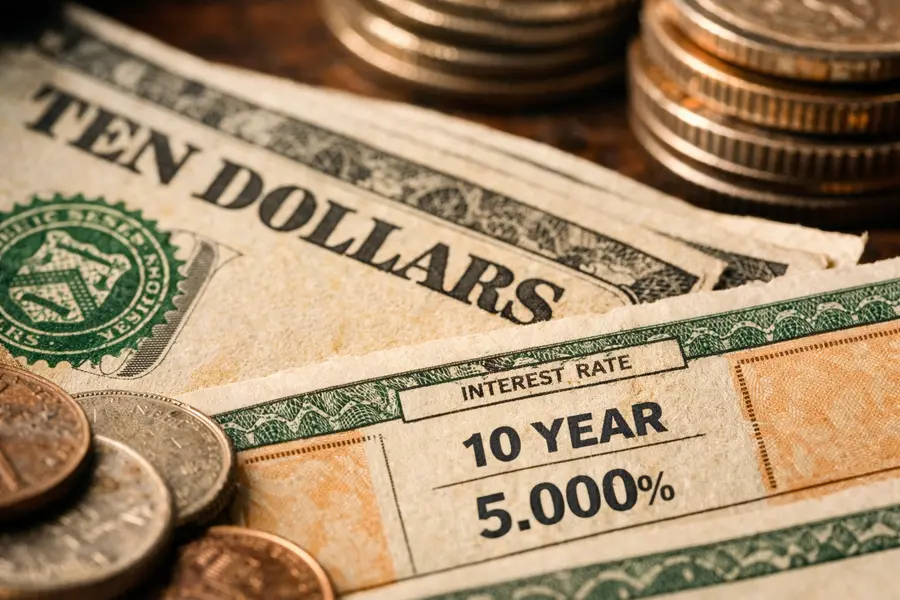
The 10-year Treasury yield climbed to 5.016% after the Fed raised its benchmark rate to 3.75%-4% and Chair Kevin Warsh signaled further hikes, reigniting higher-for-longer fears.
- The 10-year Treasury note yield reached 5.016%, revisiting levels not seen sustainably since 2007 and last briefly touched in late 2023.
- The Federal Reserve lifted its benchmark rate 25 basis points to 3.75%-4%, with 16 of 18 FOMC officials projecting at least one additional hike.
- Growth equities led the retreat: Nvidia (NVDA) shed 2.37% and Oracle (ORCL) fell 5.38% as markets repriced the entire rate path.
Lead
The yield on the 10-year U.S. Treasury note climbed above 5% this week - reaching 5.016% and holding near that threshold - after the Federal Reserve's September 17 rate decision and hawkish signals from Chair Kevin Warsh cemented expectations for a prolonged period of elevated borrowing costs. The move reset the cost of capital across mortgages, corporate debt, and equity valuations while driving broad selling across U.S. stock markets, revisiting a level not seen sustainably since July 2007.
What Pushed the 10-Year Yield Above 5%?
Three forces converged to breach the threshold simultaneously. The Fed voted 12-0 on September 17 to raise the federal funds rate 25 basis points to a target range of 3.75%-4%, the first increase since mid-2023. Updated projections showed 16 of 18 FOMC participants expecting at least one more hike before year-end, with four projecting two additional moves. Warsh, who sharpened his tone at the Jackson Hole symposium in late August, said inflation has been "too high for too long" and declined to soften the tightening path despite some recent data improvement.
Geopolitical pressure added fuel. Sustained military tensions in the Strait of Hormuz have disrupted energy supply chains, lifting commodity prices and keeping inflation expectations elevated. Heavy Treasury issuance - driven by artificial-intelligence-linked capital expenditure and a widening federal deficit - has strained auction demand and pushed investors to require a higher term premium on long-dated debt.
Why Are Equity Markets Falling?
A sustained 5% 10-year yield compresses equity valuations by raising the discount rate applied to future earnings, hitting long-duration growth stocks hardest. The S&P 500 (SPY), which had traded within 2.5% of its August record, extended its pullback following the rate decision. The Nasdaq (QQQ) underperformed as technology names absorbed concentrated selling. Nvidia (NVDA) declined 2.37% in a single session, and Oracle (ORCL) fell 5.38%. The yield curve showed broad repricing pressure, with 2- and 3-year maturities also spiking toward 5%, signaling that markets are reassessing the full trajectory of interest rates rather than just the long end.
The competitive dynamic has also shifted structurally. Treasury notes now offer yields above 5%, making fixed-income instruments a credible alternative to equities - particularly for institutional allocators managing liability-driven mandates and for investors weighing risk-adjusted returns.
How Do Rising Interest Rates Affect the Economy?
Higher interest rates flow through multiple channels simultaneously. Mortgage rates, which track the 10-year closely, are set to push higher - compounding affordability pressures in a housing market already constrained by limited supply. Corporate issuers face steeper refinancing costs, squeezing margins for highly leveraged companies and cooling capital spending plans. For the U.S. government, a 5% 10-year yield materially increases annual debt service costs as the Treasury rolls over trillions in maturing obligations, narrowing fiscal flexibility ahead of the mid-term election cycle.
For the broader economy, higher borrowing costs also temper consumer spending on credit-financed purchases - autos, appliances, home renovations - adding a demand drag that compounds the supply-side disinflationary pressure the Fed is seeking.
How to Buy Treasury Bonds in the Current Rate Environment
U.S. Treasury notes are available directly through TreasuryDirect.gov or commission-free via major brokerages. At current yield levels, 10-year and shorter-dated notes offer returns that rival high-yield credit with dramatically lower default risk. Investors sensitive to further rate increases can limit duration exposure by concentrating purchases in 2- and 3-year maturities while still capturing near-5% yields across the curve.
Fed Guidance and the Path Forward
The FOMC's September dot plot shifted the median year-end federal funds rate estimate higher, and guidance language moved away from previous softening around data-dependency toward a more directive tightening bias. Futures markets, which entered September pricing a pause, rapidly repriced to reflect near-certain odds of a November hike and rising probability of a second increase in December. Warsh's phrase "we have work to do" quickly became the interpretive lens through which traders read every subsequent data release.
The bond market's reaction suggests investors are pricing not just near-term hikes but a structurally higher neutral rate - a premise that, if sustained, demands a fundamental revaluation of long-duration assets across all categories.
Outlook
The 10-year Treasury yield's return to 5% marks a decisive shift in financial conditions. With the Federal Reserve resuming its tightening cycle, geopolitical risks sustaining energy prices, and Treasury issuance remaining heavy, no near-term catalyst exists for a meaningful yield retreat. Equity markets face continued headwinds as valuations adjust to higher discount rates, and the breadth of the yield curve repricing signals that higher-for-longer is now the base case rather than a tail scenario. The trajectory of the 10-year yield over the coming weeks will remain the central variable for asset allocation decisions across equities, credit, and real estate alike.
Mentioned tickers: SPY, QQQ, NVDA, ORCL