Pomegra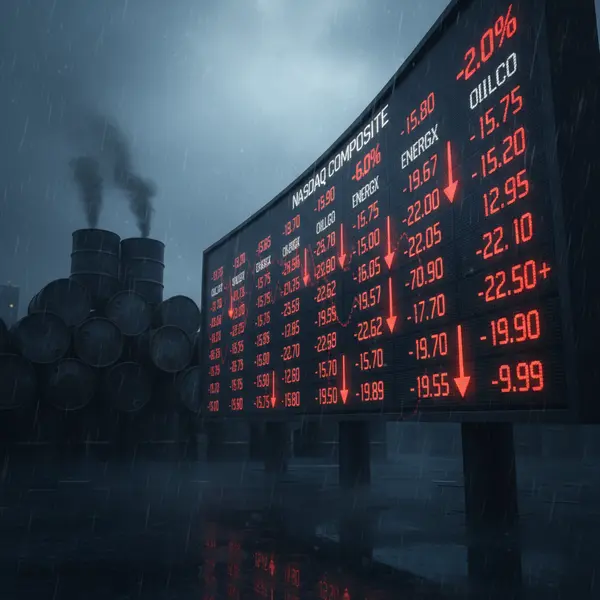
---
Futures Drift as Iran Relief Rally Proves Short-Lived
U.S. stock index futures oscillated near the flatline in early Friday premarket trading on March 27, 2026, as investors weighed the latest twist in the U.S.-Iran standoff. E-Mini Nasdaq 100 futures (NQ00) traded at $23,785.75, down 8.50 points or 0.04%, while S&P 500 futures (ES00) edged up a modest 2.00 points to $6,527.00. Dow Jones Industrial Average futures (YM00) fell 8 points to $46,222.00, essentially unchanged on the session.
The muted premarket moves follow a dramatic Thursday selloff that sent the Nasdaq Composite into correction territory — a decline of 10% or more from its recent peak — as escalating tensions over the Strait of Hormuz closure sent oil prices surging and rattled confidence in the broader equity market.
---
Trump Posts on Truth Social: Deadline Extended to April 6
Shortly after Thursday's closing bell, President Trump posted on Truth Social announcing a further 10-day extension of his pause on striking Iranian energy infrastructure, moving the deadline to 8:00 p.m. Eastern Time on April 6. Trump stated that "talks are ongoing" and described progress between Washington and Tehran as constructive.
The initial market reaction was positive, with futures on all three major indexes briefly climbing 0.3% to 0.4% in the overnight session. However, gains faded rapidly as Iran's Foreign Ministry once again denied the existence of any formal dialogue with the United States, repeating assertions that the two sides have had "no dialogue" — a pattern that has repeatedly undermined diplomatic optimism throughout the conflict.
Deutsche Bank macro strategist Jim Reid captured the prevailing market mood: "While the delay might reduce some of the immediate escalation risk, it offers no new visibility on the path towards resolution, given Iran's denials over talks, and while the Strait of Hormuz remains largely closed."
---
Oil Ticks Higher; Brent Above $100
Crude oil prices remained elevated despite the diplomatic overture. Brent international futures advanced 0.8% to $102.65 per barrel in early Friday trading, while WTI crude stabilized near the mid-$90s range. Brent had surged as high as $113 per barrel earlier in the week as Trump issued his original 48-hour ultimatum threatening to "obliterate" Iranian power plants if the Strait of Hormuz was not fully reopened.Energy Secretary Chris Wright, speaking at an industry event earlier in the week, characterized the conflict as a "short-term disruption" that could ultimately "end a decades-old problem," pointing to Iran's historical funding of terrorism and its nuclear enrichment ambitions. The administration also announced the release of 400 million barrels from the Strategic Petroleum Reserve and temporary waivers on sanctions involving Russian and Iranian crude at sea — moves described as partial offsets to what remains the largest oil supply shock in modern history.
Goldman Sachs, which raised its Brent crude price target to $110 per barrel through March and April, expects average 2026 prices of $85 and $79 per barrel for Brent and WTI, respectively — sharp upward revisions from forecasts made just weeks ago.
---
Treasury Yields Surge to Eight-Month High
The U.S. bond market continued to flash warning signals on Friday morning. The yield on the 10-year Treasury note rose 3 basis points to a high of 4.452%, its highest level since July 2025. The 30-year Treasury yield held at approximately 4.89%, while the 5-year note yielded 3.93%.
Hargreaves Lansdown senior equity analyst Matt Britzman noted that the bond market could ultimately force a resolution: "We know the White House keeps a close eye on the bond market, so pressure will be mounting to secure a deal in the Middle East sooner rather than later." Yields have pressed higher even during equity market weakness — an unusual divergence attributed to growing stagflation fears, as surging energy costs simultaneously threaten growth and inflate consumer prices.
BNP Paribas raised its fourth-quarter 2026 headline and core CPI forecasts to 3.3% and 3.2%, respectively, on an annualized basis, citing the energy price pass-through into retail goods and services. Goldman Sachs nudged its 12-month U.S. recession probability up to 30%, from 25% the prior week, with chief economist Jan Hatzius warning that the energy shock "coincides with tighter financial conditions and a waning fiscal boost in H2."
---
Dollar Firms; Gold and Bitcoin Diverge
The U.S. Dollar Index (DXY) climbed 0.1% to a four-day high of 100.028, with ING strategist Chris Turner seeing scope for a further move to 100.50 barring conciliatory signals from Tehran. ING noted that "investors are well aware of the Iranian position that it has been attacked before in the middle of negotiations," limiting the credibility of the pause announcement as a durable de-escalation.
Gold futures gained 1.5% to $4,444 per ounce in early Friday trading, extending their role as a key haven amid persistent conflict risk. The precious metal had suffered its largest weekly drop since 1983 earlier in March as institutional margin calls and inflation expectations reshaped the rate outlook. Bitcoin (BTC-USD), which has demonstrated unusual resilience throughout the conflict — rising roughly 7% since fighting began — traded near $67,642, down $830 on the session.---
Pentagon Eyes Additional Troop Deployment
Adding a further layer of uncertainty to the geopolitical outlook, Defense Department officials told the Wall Street Journal that the Pentagon is weighing the dispatch of 10,000 additional ground troops to the Middle East. Separately, Israel launched fresh strikes on targets in Tehran on Friday, deepening regional instability even as Washington sought to create space for diplomacy.
The combination of a looming April 6 military deadline, an unresolved Strait of Hormuz closure, and diverging U.S.-Iran narratives on whether negotiations are even occurring leaves equity markets in a precarious holding pattern. Until tangible progress on Strait of Hormuz reopening is confirmed, analysts expect risk assets to remain vulnerable to headline-driven volatility, with oil, defense names, and haven assets continuing to command attention into the final trading session of the week.
---
Mentioned tickers: ^IXIC, ^GSPC, ^DJI, NQ00, ES00, YM00, CL=F, BZ=F, GC=F, BTC-USD, ^TNX, ^TYX, ^FVX, DXY