
They Said Buy: A record of YouTube stock calls
What a creator said about a stock, and what the stock did next.
Not financial advice. This page describes a third-party website for general information only. Nothing here, or on the site it describes, is a recommendation to buy, sell or hold any security.
They Said Buy follows stock calls made by YouTube creators and brings the original words together with the market history that followed. Each quote links to the exact second in the source video, making it easy to check the context for yourself. The site distinguishes disclosed buys and sells from price targets, valuation views, and conditional statements. Calls that aged badly stay on the record alongside those that worked out. It gives readers a way to revisit what was actually said and what happened afterward, without treating every statement as the same kind of recommendation.
What it is
They Said Buy is an independent archive of what investing creators say about individual stocks in their public videos. Its own short description is “Investing, with receipts”: every entry has a date, a word-for-word quote, the speaker, a link to the moment in the video, and the price path since.
The project is not affiliated with the creators or brokers it covers and does not sell stock picks. It presents the archive as a selected record, covering stocks each creator discussed repeatedly since September 2025, rather than a complete history of everything a creator has said.
The site is organised around a few views:
- Receipts. Every tracked call, newest first.
- Creators. A profile per creator, listing the companies they cover, with a page for each creator-and-stock pairing.
- Stocks. One page per company, showing which creators discussed it and how.
- Portfolios. Each creator’s disclosed buys, sells and holdings, again linked to the source video.
- Leaderboard. How calls compared with the market six months later.
How a record is built
Each record follows the same four steps: the video, the words, the starting price, and what followed.
- The quote. A statement about a listed company is reproduced verbatim, with a timestamped link and a frame from the video. A guest’s view is attributed to the guest, not the host.
- The starting price. The regular-session close on the day the video was published (New York time) anchors the record. Videos published after the close use that day’s close. The site is explicit that this is a reference point, not a price anyone could necessarily have traded at.
- The change since. Price change is (latest close ÷ starting close − 1) × 100, on split-adjusted closes, with stock splits marked on the chart. Dividends, fees and taxes are left out.
- The market alongside. SPY, an S&P 500 ETF, is shown over the same dates, so a stock that rose 10% while the market rose 15% is not mistaken for a great call.
Fixed windows of one, three, six and twelve months (21, 63, 126 and 252 trading days) appear once they have elapsed.
Not every statement is a “buy”
The site’s main editorial choice is to label what kind of statement each quote is, rather than collapsing everything into “they recommended it”. Labels include:
- Disclosed buy / disclosed sell / disclosed holding. The creator says they personally traded or own the stock.
- Price target and valuation view. A number or a judgement on what the company is worth.
- Conditional. “I’d buy below X” is not the same as “buy now”.
- Named as a pick, top conviction, buying the dip, hold (bullish).
- Not buying more, reducing, sold/selling, avoid, short/hedge (short selling).
- Risk acknowledged and plain mention.
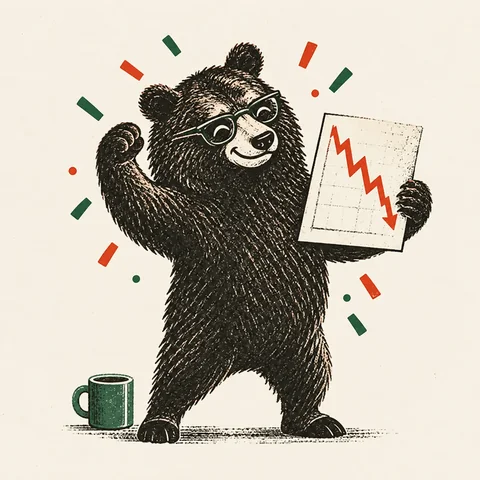
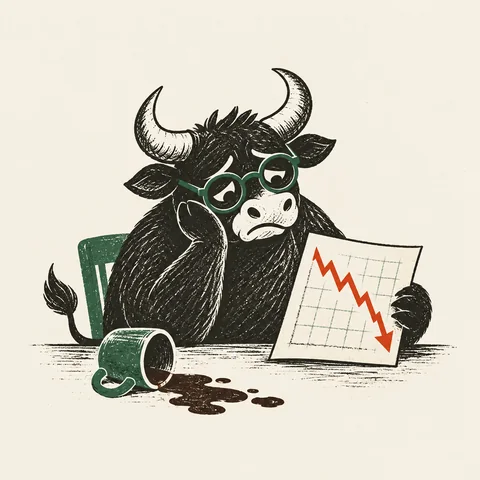

Bull and bear icons mark the first clear directional forecast, and their expression shows whether the price later moved that way. A calm face means the price stayed within 1% of its start. A newspaper icon marks statements that can’t be scored, such as a mention with no forecast, an unclear direction, or views that conflict over time. Buying, holding or naming a target does not, on its own, count as a forecast.
The leaderboard, and its caveats
The leaderboard takes each creator-and-stock pair once, from its first clear bullish or bearish forecast, and compares the stock with SPY 126 trading days later. More than 2 percentage points ahead counts as beat, more than 2 behind as lagged, and anything in between as in line. A call reversed within 20 trading days is not scored.
The site goes out of its way to stop the numbers from being over-read:
- Small samples are shrunk. Ordering uses (beat + 5) ÷ (matured calls + 10), which pulls small records toward 50%, and each rate is shown with a 95% Wilson interval.
- No ranks yet. A place needs 10 matured calls, and places appear only once three creators qualify. As of October 2026 none had. Across the archive, 25 of 53 matured calls beat the market, a 47% beat rate.
- Price moves are not returns. The site does not know a creator’s actual trades, timing, position size or costs unless they disclose them.
Corrections to wording, speaker, timing or context are reviewed, and changes are logged on a public corrections page.
Why it is useful
Stock talk on video is easy to remember selectively. A viewer recalls the call that doubled and forgets the three that didn’t, which is hindsight bias and confirmation bias at work. Popular picks also spread through herd behaviour long after the original reasoning is forgotten. A dated, sourced record with the market beside it is a simple check on all three. It shows how a call has aged, rather than how it felt at the time.
It is equally a reminder of the limits of judging anyone on a handful of calls. Short records are noisy, and a creator who beats the market over six months on two stocks has told you very little.
As the site itself says, none of this is investment advice, and past price moves don’t predict future results.
See also: Market timing · Buy and hold · Overconfidence bias · Recency bias · Social media pump dynamic · Survivorship bias in stock indices